

Why Do Professional Mechanics Always Carry More Than One Ratchet? Here’s the Rarely Explained Technical Reason | PT Panca Makmur Baru
Have you ever seen an automotive mechanic, factory maintenance technician, or engineer carrying three to five ratchets in their toolbox?
Many people assume the reason is simple:
“So there’s a spare in case it breaks.”
But that’s not the case.
In fact, professional mechanics almost never replace a ratchet during a job due to damage. They carry several ratchets because each job has different torque characteristics, workspaces, and bolt types.
Choosing the wrong ratchet not only makes the job take longer, but can also cause:
- Bolt stripping
- Bolt head breakage
- Hand fatigue
- Increased maintenance time
- Increased risk of work accidents
This is why in the world of industrial maintenance, ratchet selection is considered as important as choosing the right socket. Grainger itself categorizes ratchets based on drive size, head shape, handle length, and specific applications such as confined spaces, food grade environments, and areas with a risk of sparks.
The Biggest Beginner Mistake: Assuming All Ratchets Are the Same
At first glance, all ratchets look similar. However, there are significant differences in:
- Drive Size
- Tooth Count
- Handle Length
- Head Style
- Material
- Finishing
- Torque Capacity
These differences are especially noticeable when working in confined spaces, production machinery, heavy vehicles, or industrial installations.
Why Do Mechanics Always Carry 3 Ratchet Sizes?
1. Ratchet 1/4″
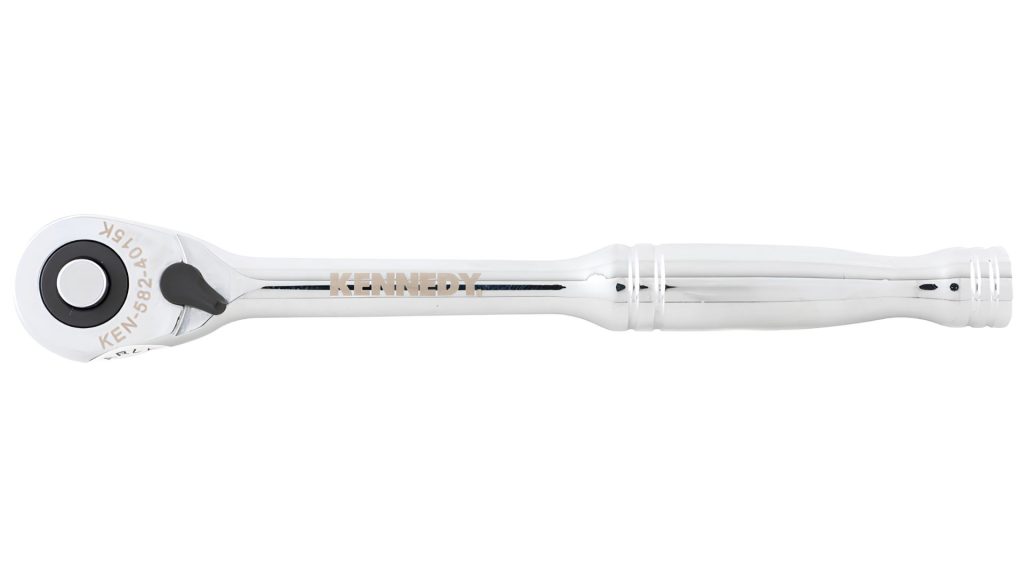
Used for:
- Vehicle dashboards
- Interiors
- Sensors
- Small bolts
- Electronics
Advantages:
- Lightweight
- High precision
- Suitable for small bolts
However, do not use it for bolts that require high torque.
2. Ratchet 3/8″
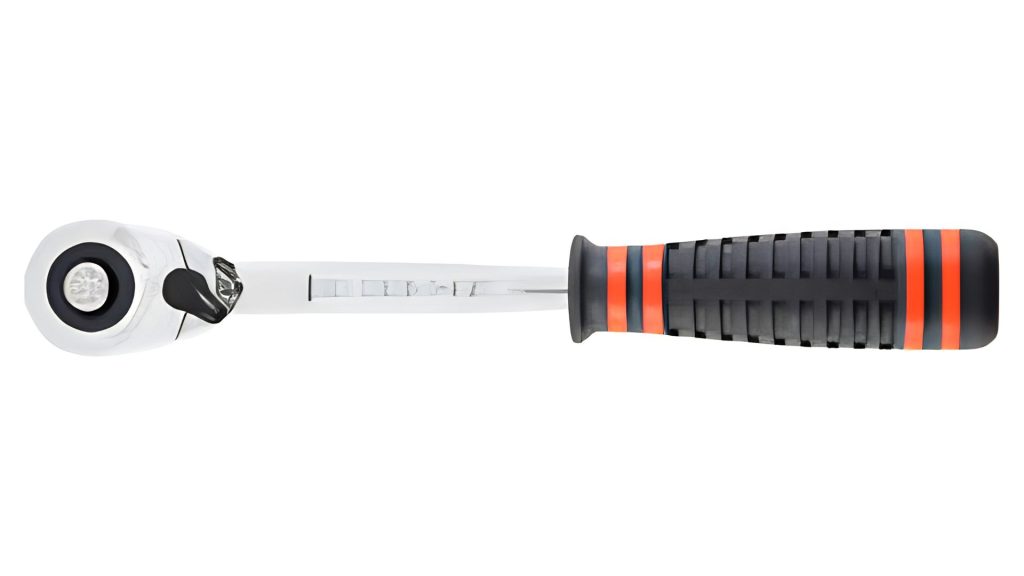
This is the most versatile size. Approximately 70% of maintenance work uses this size because it can handle:
- Engines
- Chassis
- Motors
- Conveyors
- Pumps
- Machine panels
For many technicians, the 3/8″ size is their “everyday ratchet.”
3. Ratchet 1/2″
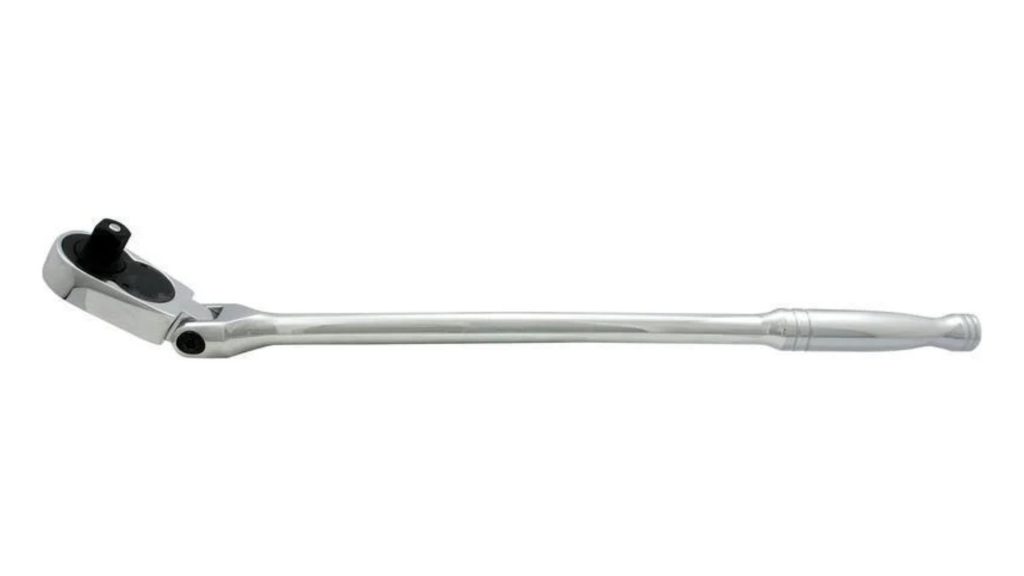
Used when high power is required. Examples:
- Lug nuts
- Diesel engines
- Heavy equipment
- Steel structures
- Manufacturing industry
This ratchet is designed to produce much greater torque than other sizes.
Why is Tooth Count So Important?
One specification that is often overlooked is the number of teeth on the ratchet mechanism.
The higher the number of teeth:
- Smaller swing arc
- Ratchet can work in tighter spaces
- Smoother rotation
- Increased productivity
To illustrate:
A 36 tooth ratchet requires a wider swing arc than a ratchet with a higher tooth count to turn a bolt to the next step. In tight spaces such as the engine compartment of a vehicle or production machinery, a mechanism with a smaller swing arc will be much more efficient because it requires less room to maneuver.
For this reason, professional mechanics often choose high quality ratchets for precision work.
Why Are There Ratchet Flex Heads?
Imagine a bolt behind a pipe. A regular ratchet often won’t fit. This is where a Flex Head Ratchet comes in.
The ratchet head can move at a specific angle so the socket remains aligned with the bolt even when your hand is not straight.
This type is widely used in:
- Engine bays
- Production machinery
- HVAC
- Industrial maintenance
- Restricted access areas
Grainger offers a variety of flex head ratchets specifically designed to improve access to bolts from various angles.
Long Ratchet vs Short Ratchet
This is also the reason why mechanics carry more than one ratchet.
| Short Ratchet | Ratchet Panjang |
| Easier to get into tight spaces. Suitable for: – Car engines – Electrical panels – Laboratory equipment | Provides greater leverage. This means less force is required by the operator. The result: – More comfort – Faster – Less fatigue |
Some models even have adjustable handles for increased reach and leverage when needed.
Ratchet is not a tool for opening stuck bolts
This mistake is still frequently made.
Ratchets are designed for tightening and loosening bolts, not as the primary tool for breaking overtightened or rusted bolts.
For stuck bolts, technicians typically use:
- Breaker Bar
- Penetrating Oil
- Impact Wrench
Once the bolt starts moving, the ratchet is used to speed up and streamline the job. Grainger also offers a combination ratchet and breaker bar kit for maintenance needs.
How to Choose the Right Ratchet?
Before purchasing, ask yourself the following questions:
- Does the job require high torque?
- Is the workspace cramped?
- How often will the ratchet be used daily?
- Do you work in a food grade or pharmaceutical area that requires corrosion resistant materials?
- Do you work in a hazardous area?
By answering these questions, you can determine whether you need a standard ratchet, a flex head, an adjustable length, a stainless steel ratchet, an insulated ratchet, or a non sparking ratchet, depending on the application.
Why Choose Grainger Products?
As one of the world’s largest suppliers of MRO (Maintenance, Repair & Operations) products, Grainger provides a wide range of hand tool solutions for industrial, manufacturing, automotive, construction, energy, and commercial facilities.
Through its product network, Grainger offers a wide selection of ratchets and supporting equipment with specifications tailored to various types of work, from daily maintenance to specialized applications in industrial environments.
Get Original Grainger Products at PT Panca Makmur Baru
If you need genuine Grainger products for your industrial or workshop needs, be sure to purchase through a trusted distributor.
PT Panca Makmur Baru provides a variety of industrial supply solutions, including MRO, hand tools, safety equipment, chemical maintenance, and engineering needs, with product consultation services tailored to your application.
Our team is ready to help you select the right ratchet, socket, and work equipment specifications, ensuring your tool investment is more efficient and meets your operational needs.
Want to learn more or order now? Contact us at PT Panca Makmur Baru – the official Grainger distributor in Indonesia. Click the “Contact Us” button now!
Professional mechanics carry more than one ratchet not to appear more expert, but because each job has different requirements. From drive size, handle length, head shape, to the work environment, all affect efficiency, safety, and the quality of the work. Choosing the right ratchet will save time, reduce the risk of bolt damage, and increase productivity in the field.