Bolts Don’t Always Break from Being Over-Tightened: Here Are the Causes | PT Panca Makmur Baru
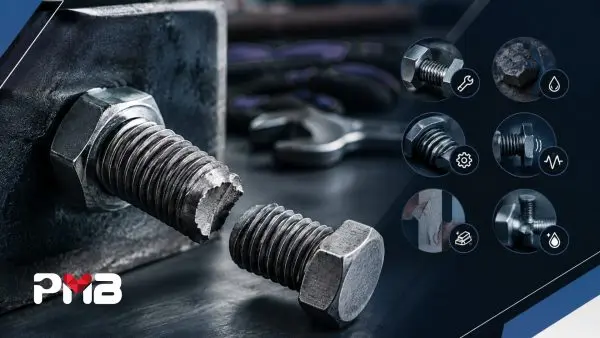
Have you ever tightened a bolt as usual, but suddenly the bolt broke?
Many people immediately conclude that the cause is that the bolts are tightened too tightly. This suspicion may be true, but broken bolts are not always caused by over tightening.
In maintenance, assembly, manufacturing, automotive, and workshop work, bolt failure or fastener failure can occur due to many factors: starting from bolt grade and material, preload, thread friction, thread damage, fatigue due to repeated loads, corrosion, to inappropriate installation methods.
In fact, bolts installed using a torque wrench can still fail if the condition of the bolts, connections, materials and installation procedures are not correct.
Therefore, before blaming “too tight,” it is important to understand what actually happens to the bolt when it is tightened.
Bolts Actually Work Like Springs
A bolt serves a purpose beyond merely “binding” two components together.
When a bolt is tightened, it undergoes slight stretching and generates preload—an initial clamping force that holds the connected components together.
Simply put:
Tightening → bolt stretches → preload is generated → components are clamped
As long as the bolt remains within its elastic range, it can return to a state close to its original condition once the load is removed.
However, if the stress exceeds the elastic limit or proof load, the bolt may undergo permanent deformation. If the load continues to increase until the bolt’s maximum tensile strength is reached, the bolt may ultimately fracture.
This means the real issue is not simply:
“The bolt is too tight.”
Rather, it is:
Do the forces and conditions acting on the bolt remain within the limits for which the connection was designed?
A. Overtorquing Can Indeed Cause Bolts to Snap
Let us begin with the most frequently suspected cause. If a bolt is tightened beyond the specified limit, the stress on the bolt can rise past its elastic limit or even its tensile strength.
Consequences may include:
- bolt deformation
- thread damage
- necking
- loss of load bearing capacity
- and ultimately, fracture
However, determining what constitutes “too tight” cannot be based solely on how hard someone turns the wrench.
Tightening values must take into account the bolt type, size, grade, joint configuration, thread condition, lubrication, and application specifications.
NASA itself identifies fastener material, plating, lubrication, corrosion, thread type, fatigue loading, and torque as factors that must be considered in fastener design.
B. Torque Is Not Equal to Bolt Tensile Force
This is a frequently overlooked aspect. When applying torque to a bolt or nut, not all of that energy goes into stretching the bolt.
A significant portion of the energy is consumed in overcoming friction both within the threads and at the contact area between the bolt head or nut and the mating surface.
Fastenal explains that torque is an indirect method of controlling bolt tension. They also note that variations in friction whether in the threads or under the bolt head or nut can alter the relationship between torque and tension.
Consequently, two bolts of the same size tightened to the same torque value will not necessarily yield the same preload if their friction conditions differ.
This is why thread condition and lubrication should not be underestimated.
C. Dirty, Damaged, or Incorrect Threads
Imagine installing a new bolt into a hole that is:
- full of dust
- rusty
- damaged (stripped threads)
- contains debris
- the wrong pitch
- or cross-threaded
The bolt might still turn, but the condition of the connection is far from ideal. Damaged threads also increase the risk of thread stripping where the threads on the bolt or in the hole fail before the required preload is achieved.
Therefore, before installing a bolt, check the following:
Bolt → Threads → Hole → Washer → Contact surface
Do not simply assume that just because the bolt fits, the connection is correct.
D. Bolts Can Break Due to Fatigue, Not from Being Tightened Once
This is one of the most frequently overlooked causes. Bolts in machinery do not always experience constant loads.
Machinery can be subject to:
- vibration
- temperature fluctuations
- cyclic loading
- pressure changes
- impacts
- start stop cycles
- changes in mechanical load
Such cyclic loading can lead to material fatigue.
Small cracks may begin to form in areas of stress concentration, such as around the threads or at points where the geometry changes. Over time, these cracks propagate until the bolt eventually breaks.
Bossard explains that screws or bolts subjected to dynamic loads can fail due to material fatigue, and that joint design and load control are crucial factors in preventing this.
Therefore, when a bolt breaks during the tightening process, the tightening process itself is not necessarily the cause of the failure.
The bolt may have already sustained damage from previous loading cycles, and the final tightening was simply the moment when the failure finally occurred.
E. Corrosion Can Make Bolts Much More Vulnerable
A bolt that appears intact is not necessarily in good condition. Corrosion can reduce the material’s effective cross section and create areas of stress concentration.
Environments such as:
- outdoor areas
- marine settings
- mining sites
- oil & gas facilities
- chemical plants
- high humidity areas
- environments exposed to chemicals
Can increase the risk of corrosion related damage. Corrosion can also interact with fatigue, thereby reducing the fastener’s service life.
Research on corrosion fatigue in bolted joints indicates that corrosion can lower a fastener’s fatigue strength and exacerbate the risk of failure under specific loading conditions.
Therefore, selecting a bolt based solely on size is insufficient; the operating environment must also be taken into account.
F. Bolt Material and Grade Should Not Be Ignored
Not all bolts have the same load bearing capacity. Bolts of the same diameter can exhibit different strength characteristics due to variations in grade, material, and manufacturing processes.
Therefore, replacing a broken bolt with another of the “same size” is not necessarily the correct solution.
Factors to consider include:
- diameter
- length
- thread pitch
- grade/property class
- material
- coating
- operating temperature
- environmental conditions
- preload requirements
- type of load
Fastenal explains that bolt grade influences the elastic range and the fastener’s load bearing capacity.
Same size ≠ same strength.
G. Bolts Can Fail Due to Hydrogen Embrittlement
There is a type of failure that is harder to detect: hydrogen embrittlement.
This phenomenon is a particular concern for high strength steel fasteners.
Hydrogen entering the material can reduce ductility and make the material more susceptible to cracking or fracture when under stress.
Interestingly, the failure does not always occur immediately upon installation.
NASA has noted that hydrogen embrittlement can be an issue with certain alloy steel fasteners, particularly those with high strength and hardness.
Consequently, processes such as:
material selection → heat treatment → surface treatment → plating → production
can also impact fastener reliability.
This is one reason why selecting bolts based solely on price and size can be a risky decision for critical applications.
H. Stainless Steel Bolts Can Also Experience Galling
Another issue often mistaken for a “bolt that is too tight” is galling, or thread seizure.
Under certain conditions, thread surfaces can undergo adhesion and sustain damage during the tightening process. Consequently, the bolt becomes increasingly difficult to turn before suddenly seizing up.
Bossard notes that material pairing, lubrication, and assembly conditions influence the risk of galling, particularly with stainless steel fasteners.
So, if a bolt becomes harder to turn, do not simply apply more force.
Stop. Check the condition of the threads.
Forcing a bolt that has already seized can actually result in damaged threads or a broken bolt.
I. Uneven Tightening Can Also Be a Problem
What happens when a flange uses multiple bolts?
It does not mean that each bolt can simply be tightened haphazardly, one by one, until it feels tight. For certain connections, preload distribution must be carefully managed to prevent the load from concentrating on only a few bolts.
Uneven tightening can lead to:
- some bolts bearing excessive load
- some bolts being too loose
- uneven gasket compression
- leakage
- joint deformation
- accelerated fatigue
Fastenal explains that uneven preload can result in some bolts becoming loose while others are overloaded.
This is why tightening procedures for specific connections may require a particular tightening sequence, rather than simply tightening every bolt as much as possible.
J. An impact wrench does not mean it can be used without control.
An impact wrench is highly useful for tasks requiring speed and high torque.
However, there is a distinction between:
“Capable of generating high torque” and “Suitable for final tightening.”
For certain tasks, an impact wrench can be used during the initial tightening stage, whereas the final stage requires a more controlled method tailored to the joint’s specifications.
Controlled tightening methods aim to achieve more consistent and repeatable preload.
Therefore, do not use an impact wrench based simply on the idea that:
“The more powerful the impact, the more secure the bolt.”
What is required is control that meets the specific needs of the joint.
How to Determine the Cause of a Broken Bolt
If a bolt breaks in the field, do not simply discard the old bolt and replace it. Try performing a simple inspection first.
Check 1 — Where did the bolt break?
Did it break:
- at the head?
- in the threaded area?
- near the mating surface?
- in the middle of the bolt shank?
The location of the break can provide initial clues regarding the type of loading or areas of stress concentration.
Check 2 — What is the nature of the fracture?
Look for:
- deformation
- cracks
- corrosion
- damaged threads
- signs of friction
- discoloration
- areas showing signs of necking
Check 3 — What is the condition of the threads?
Check for:
- worn threads
- cross threading
- dirt/debris
- rust
- incorrect pitch
- incompatible bolt and nut
Check 4 — What are the operating conditions?
Ask:
- Is the machine subject to vibration?
- Does it undergo thermal cycling?
- Is it exposed to chemicals?
- Is it subjected to repeated loads?
- Have the bolts been used previously?
- Have there been any design or component changes?
Check 5 — Are the bolts used actually suitable?
Verify:
diameter + length + thread + grade + material + coating + application
If the problem recurs, do not simply replace the bolts. Identify the root cause.
Checklist Before Tightening Bolts
Use the following simple checklist before assembly:
| Items Checked | Question |
| Size | Are the diameter and length suitable? |
| Thread | Do the pitch and thread type match? |
| Grade | Does the strength class meet the requirements? |
| Condition | Are the bolts free from damage and corrosion? |
| Hole | Are the threads on the mating part still in good condition? |
| Surface | Are the contact surfaces clean and suitable? |
| Lubrication | Does it require lubricant, or should it be used dry? |
| Tool | Is the socket or wrench size correct? |
| Tightening | Are there tightening specifications? |
| Sequence | Is there a specific tightening sequence? |
| Environment | Does the connection operate in a hot, corrosive, or vibrating environment? |
A simple checklist like this can help prevent problems that only become apparent after the machine is in operation.
Don’t Just Replace the Bolts. Check the Fastening System.
When a bolt breaks, the quickest solution is indeed:
get a new bolt → install → tighten → done.
However, if the root cause is fatigue, corrosion, incorrect grade, thread damage, improper preload, or a joint design issue, a new bolt will only serve as a temporary fix.
For industrial applications, a more appropriate approach is to examine the entire fastening system:
Fastener + Joint Design + Thread + Friction + Preload + Tool + Assembly Procedure + Operating Condition
This is because the failure of a single component can affect the entire joint.
NASA itself includes fastener material selection, lubricants, corrosion, locking methods, washers, threads, fatigue loading, and torque as part of its fastener design considerations.
The Right Tools Also Determine the Outcome of the Work
Once the bolts, connections, and specifications have been verified, the next step is to use the appropriate tools.
For maintenance and workshop tasks, commonly used tools include:
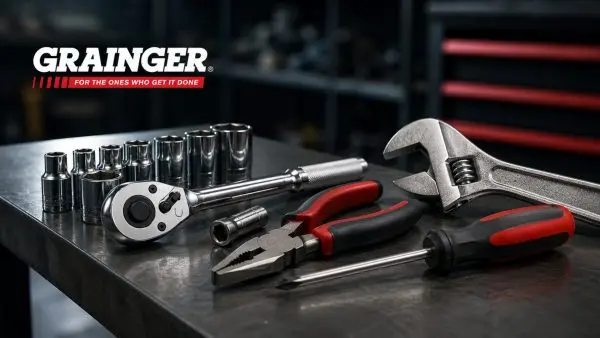
1. Socket Set
A socket set enables technicians to install and remove bolts using the correct size.
Selecting the right socket also helps minimize the risk of damaging the bolt head caused by using an incorrect size.
2. Professional Hand Tools
Wrenches, ratchets, breaker bars, sockets, and other hand tools must be selected based on the specific task and the load involved.
For industrial and workshop applications, Kennedy by Cromwell offers a wide range of products, including hand tools, workshop equipment, measuring tools, cutting tools, and maintenance support gear.
3. Sockets with Ken-Grip Technology
When the issue is not a broken bolt but rather a worn or rounded bolt head, the choice of socket becomes crucial.
Kennedy offers a line of sockets featuring Ken Grip technology, designed to grip the sides of the bolt and facilitate work on fasteners with damaged heads.
4. Professional Tools for Automotive & Industrial Use
SATA also provides a comprehensive range of hand tools including sockets, ratchets, pliers, screwdrivers, and air tools for automotive and industrial applications. PMB supplies SATA products for professional use in Indonesia.
When Should Bolts Be Replaced?
Do not wait until the bolt actually breaks. Consider replacement if any of the following are found:
- damaged threads
- severely worn bolt head
- significant corrosion
- deformation
- bent bolt
- cracks
- signs of fatigue
- permanent elongation
- grade unsuitable for the application
- unknown usage history for critical applications
Especially for connections involving safety implications or high downtime risks, using fasteners that meet specifications is far more important than simply looking for the cheapest bolt.
Need hand tools for maintenance and workshop use?
Fastening tasks require the right tools not just any tool capable of turning a bolt.
PT Panca Makmur Baru supplies Chemical MRO products and tools for a wide range of sectors, including industry, maintenance, engineering, workshops, manufacturing, and automotive.
Offering everything from hand tools, socket sets, wrenches, and ratchets to workshop equipment, measuring tools, and various industrial tools, PMB features products from brands such as Kennedy by Cromwell and SATA.
If you are looking for tools for maintenance work or need assistance selecting the right product for a specific application, the Panca Makmur Baru team can help match the tools to your operational needs.
Not sure which tools to use? Consult PMB about your requirements before making a purchase.
Want to know more or place an order? Contact us at PT Panca Makmur Baru—an authorized distributor of tools in Indonesia. Click the “Contact Us” button now!