LOTO Is More Than Just Padlocks: Selecting Lockout Devices for Various Energy Sources | PT Panca Makmur Baru
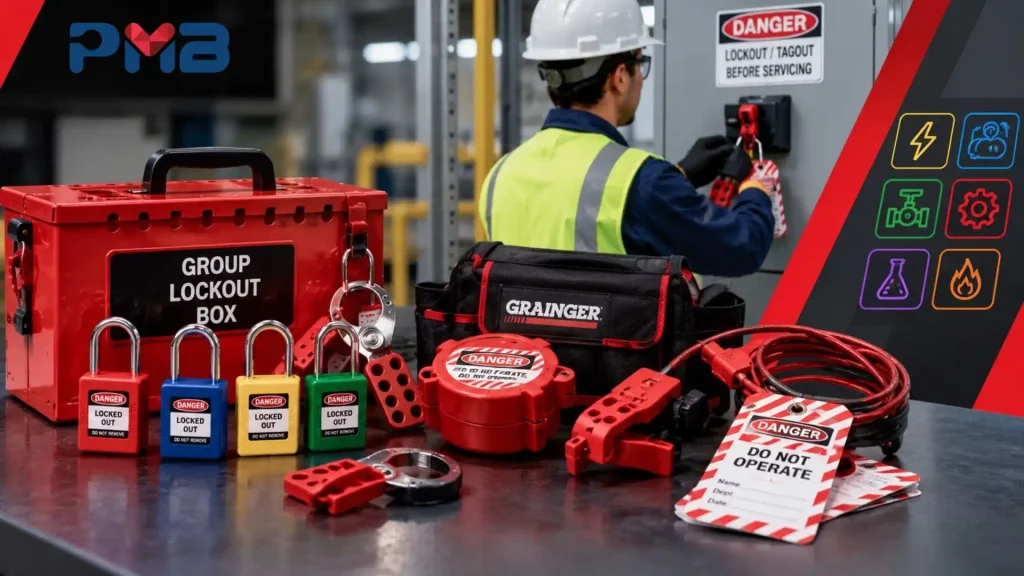
When hearing the term Lockout/Tagout (LOTO), many people immediately picture a red padlock attached to a machine.
However, LOTO is about more than just padlocks.
In maintenance work, hazards can stem from electricity, air pressure, hydraulic pressure, steam, gas, mechanical energy, gravity, or other forms of stored energy. OSHA specifies that hazardous energy can originate from electrical, mechanical, hydraulic, pneumatic, chemical, thermal, and other sources. An unexpected release of energy during servicing or maintenance can result in serious or even fatal injuries.
Therefore, LOTO devices must be selected based on the specific energy source and the isolation point.
This is a frequently overlooked aspect. Simply having a few padlocks and tags does not necessarily mean a facility has an adequate LOTO system in place.
The real question is:
Are the lockout devices being used truly compatible with the equipment undergoing maintenance?
What Does LOTO Actually Control?
The primary objective of LOTO is to control hazardous energy so that machinery or equipment cannot be inadvertently activated or release hazardous energy during servicing and maintenance work.
These energy sources may include:
- Electrical energy
- Pneumatic energy
- Hydraulic energy
- Mechanical energy
- Thermal energy
- Chemical energy
- Gravitational energy
- Stored or residual energy
OSHA specifically identifies electrical, mechanical, hydraulic, pneumatic, chemical, thermal, and other forms of energy as sources that must be controlled within the context of hazardous energy control.
This means that simply turning off a machine’s control switch is not necessarily sufficient.
Push buttons and selector switches do not qualify as energy isolating devices under OSHA standards. An energy isolating device is a mechanical device that physically prevents the transmission or release of energy such as a circuit breaker, disconnect switch, line valve, block, or similar device.
Why Must LOTO Device Types Be Matched to the Application?
Consider the following two scenarios:
- Machine A
Its energy source is an electrical panel.
The isolation point is a circuit breaker. - Machine B
Its energy source is compressed air.
The isolation point is a pneumatic fitting or regulator.
Both require energy control, yet the lockout devices used need not be the same.
For Machine A, an electrical lockout might be required.
For Machine B, a pneumatic lockout is more appropriate.
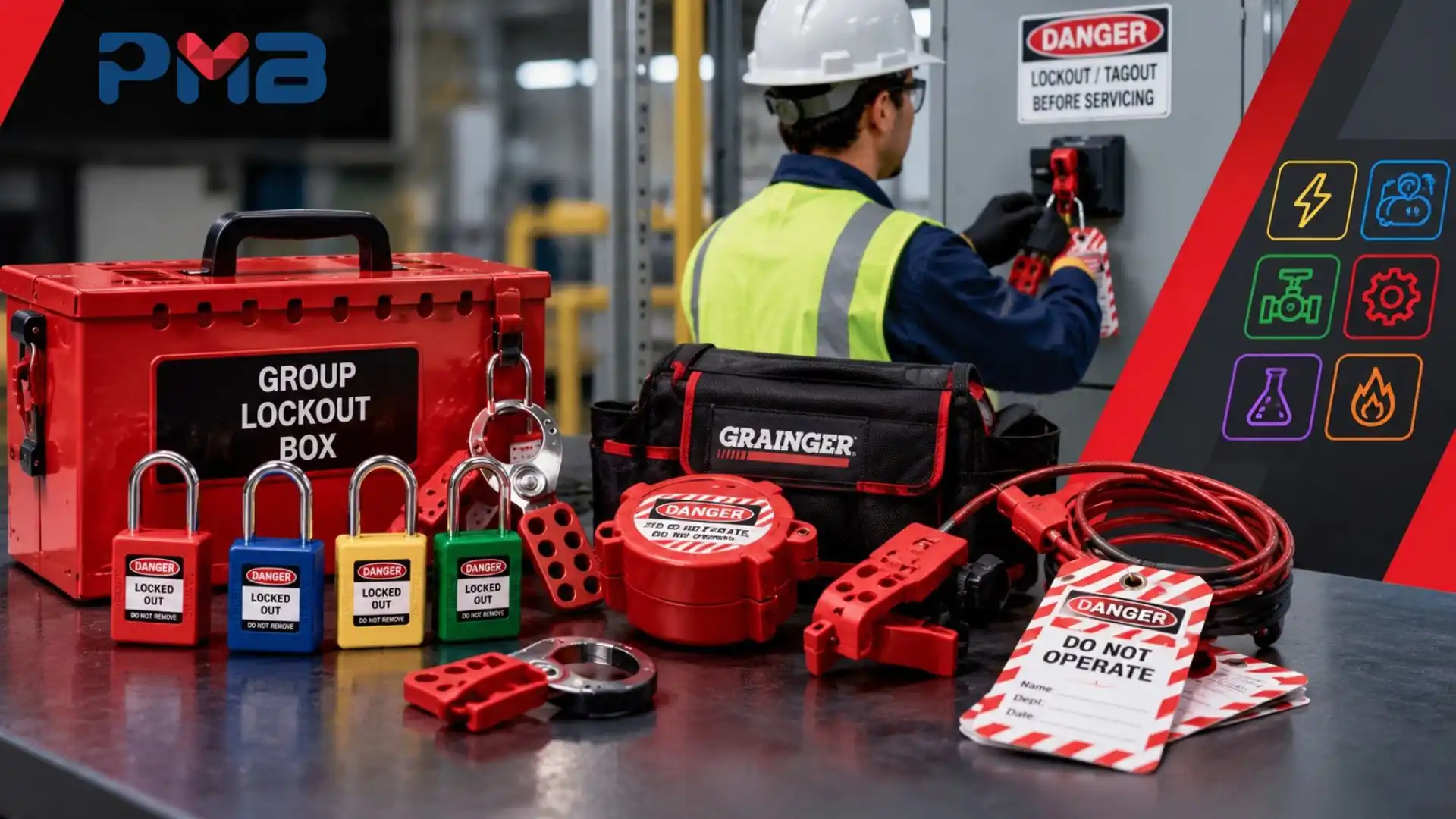
Grainger currently offers a wide range of LOTO categories, such as electrical lockouts, valve lockouts, pneumatic lockouts, cable lockouts, flange lockouts, gas cylinder lockouts, steering wheel lockouts, lockout hasps, group lockout boxes, tagout tags, and lockout stations & kits.
Therefore, the process of selecting LOTO equipment should begin with the question, “What energy source do I need to isolate?” rather than, “Which LOTO padlock should I choose?”
1. Electrical Lockout
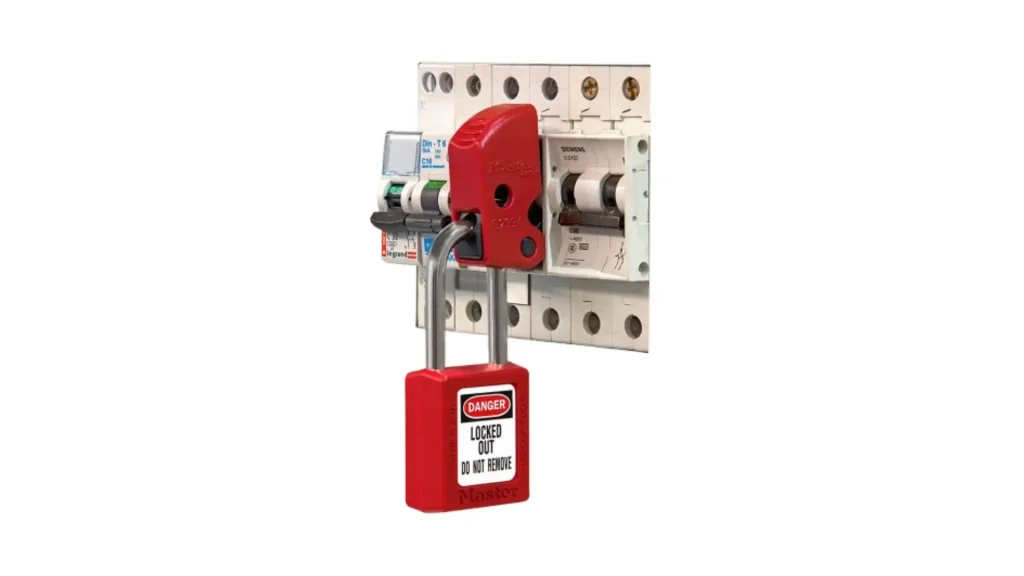
Electrical energy is one of the energy sources most frequently associated with LOTO. However, electrical lockout devices come in various forms because electrical isolation points can differ.
Examples include:
- Circuit breakers
- Electrical disconnects
- Plugs
- Switches
- Fuses
- Panels or specific isolation devices
Electrical lockout devices help prevent the re-energization of power sources while equipment is undergoing maintenance. Grainger offers a range of electrical lockout devices tailored to specific types of electrical equipment.
When are they used? For instance, during:
- Panel maintenance
- Production machine repairs
- Motor servicing
- Electrical troubleshooting
- Preventive equipment maintenance
However, the choice of device must be matched to the type and design of the energy isolating device used on the equipment.
2. Valve Lockout
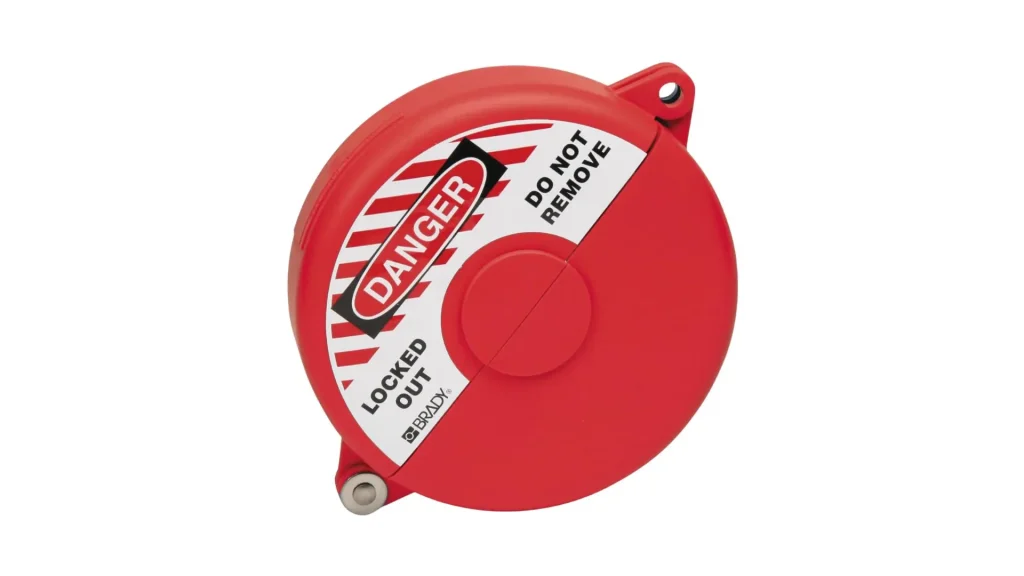
Not all hazardous energy is electrical in nature. In piping, process, and utility systems, energy can be controlled via valves.
Valve lockouts are used to prevent valves from being operated during maintenance work.
Different types of valves may require different devices. Examples include:
- Ball valves
- Gate valves
- Butterfly valves
- Plug valves
Since valve designs vary, do not assume that a single lockout device is suitable for all of them.
For facilities with multiple valve types, the selection of a device must take into account the size, handle shape, valve position, and locking mechanism.
3. Pneumatic Lockout
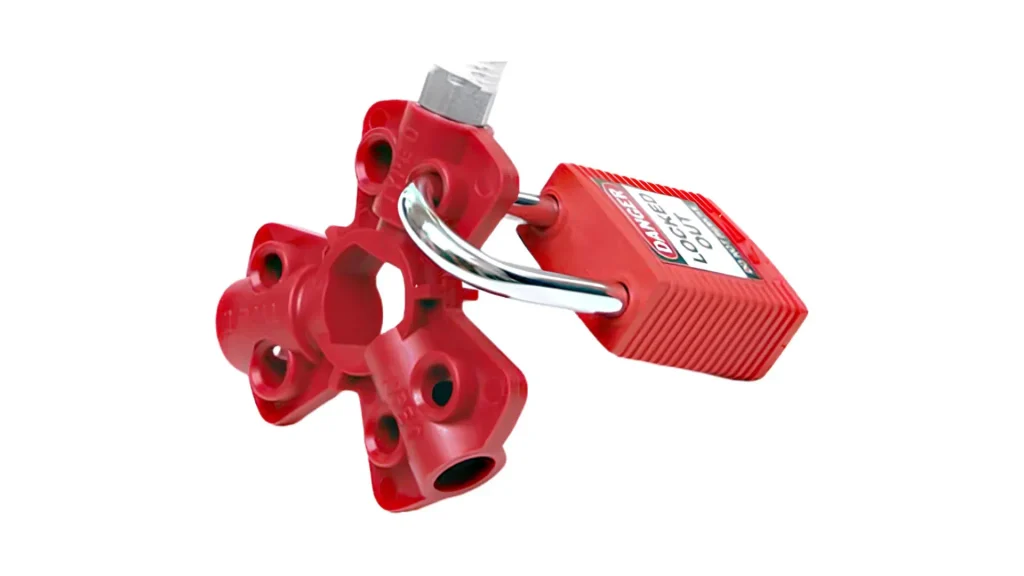
Pneumatic systems use air pressure to generate power. However, shutting down the machine does not automatically mean the air pressure is safe; residual pressure may still be stored within the system.
Grainger offers pneumatic lockout devices to secure pneumatic fittings and regulators, preventing equipment from being re-energized during servicing.
Pneumatic lockout devices can be used in facilities that utilize:
- Air compressors
- Pneumatic tools
- Pneumatic cylinders
- Production machinery
- Automated equipment
Therefore, when performing maintenance on pneumatic equipment, consider not only electrical isolation but also pneumatic energy isolation.
4. Hydraulic Lockout
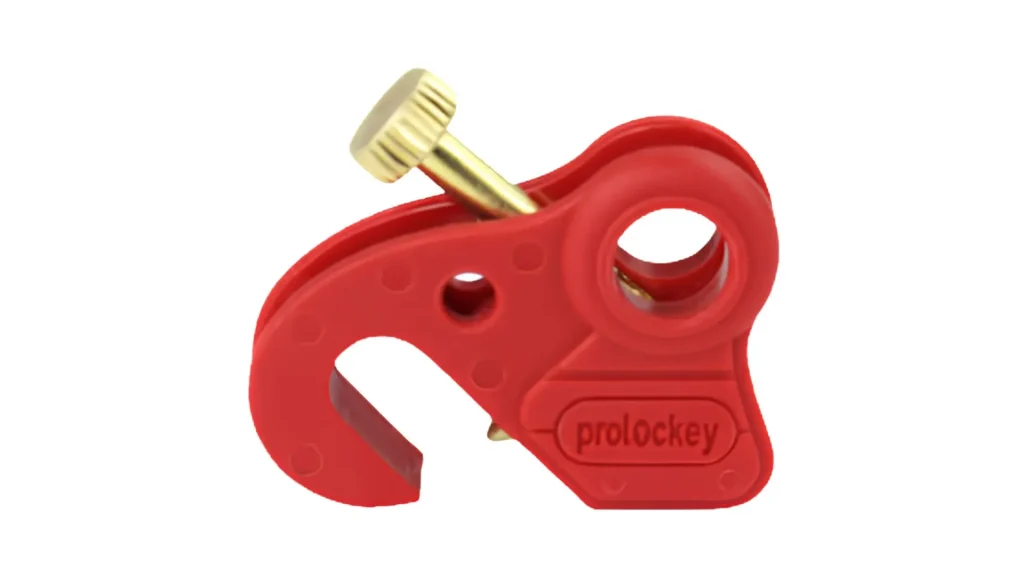
Hydraulic equipment utilizes pressurized fluid to generate force or motion. Examples include:
- Hydraulic presses
- Hydraulic lifts
- Industrial machinery
- Mobile equipment
- Hydraulic actuators
Hazards associated with hydraulics stem not only from active pressure sources; residual pressure can also constitute a source of hazardous energy.
OSHA specifies that stored or residual energy must be released, disconnected, restrained, or rendered safe before servicing is performed. If there is a potential for stored energy to re-accumulate to dangerous levels, the situation requires continuous monitoring.
Therefore, energy control procedures must account for the isolation and release of stored energy, rather than simply shutting off the power.
5. Cable Lockout
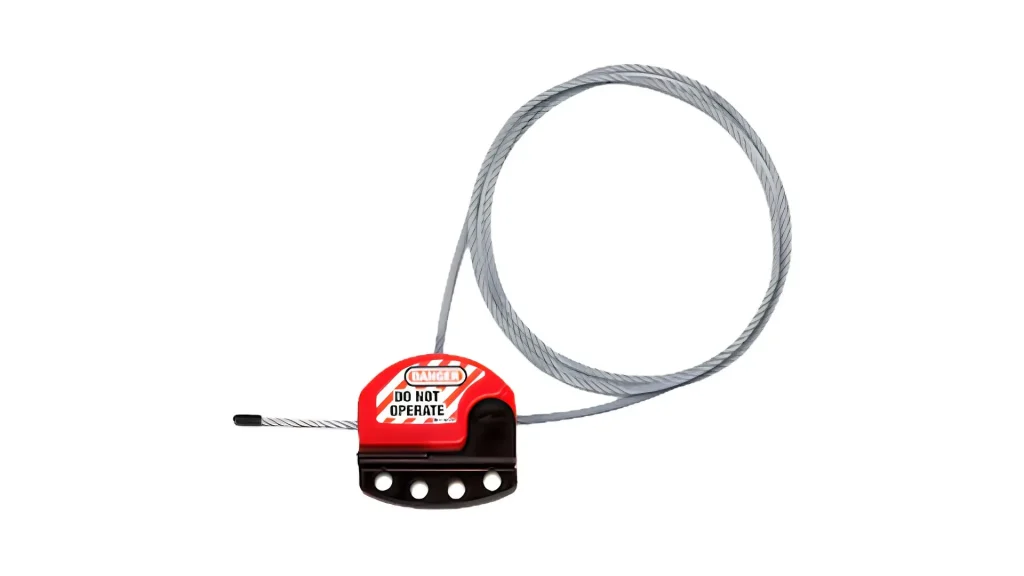
What if the isolation point is incompatible with standard lockout devices?
This is where a cable lockout can be a suitable option for specific applications. Cable lockouts utilize a flexible cable that can help secure various types of energy isolating devices.
This type is particularly useful when the shape or configuration of the equipment makes conventional lockout devices difficult to use.
However, a word of caution:
do not choose a cable lockout simply because it appears more flexible.
Ensure that the device’s design is compatible with the isolation point and the LOTO procedures in place at the facility.
6. Lockout Hasps: When Multiple People Work on One Machine

This is a crucial LOTO device for group maintenance operations.
For example:
A machine is undergoing an overhaul involving five technicians.
If only a single padlock were used, how could one ensure that every technician retains control over the lockout status?
This is where a lockout hasp comes into play.
A hasp allows multiple padlocks to be attached to a single lockout point, enabling each authorized employee to apply their own personal lock. Grainger explains that LOTO hasps allow multiple technicians to attach their respective locks, ensuring the equipment cannot be re-energized until the associated locks are removed.
As long as locks remain attached in accordance with group LOTO procedures, the re-energization process must be strictly controlled.
7. Group Lockout Box
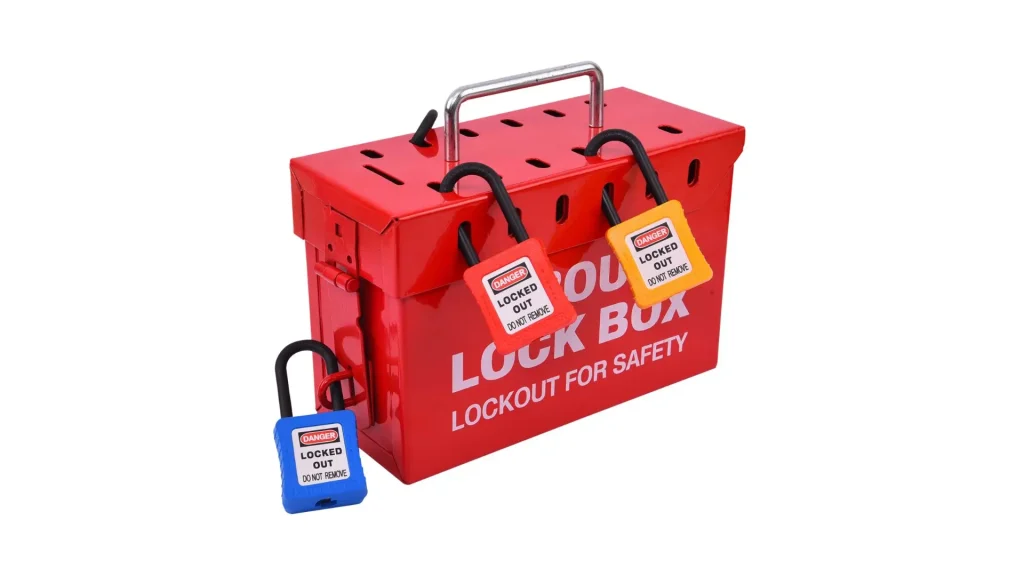
What if the job involves multiple technicians, numerous energy sources, or several work groups?
A group lockout box can be used as part of a group LOTO system. The concept is as follows:
- Energy sources are isolated.
- Keys from equipment locks are placed inside the group lockbox.
- Each authorized employee attaches a personal lock to the box.
- As long as the personal lock remains attached, access to the keys is controlled.
Grainger explains that group lockout boxes are used when multiple people are servicing the same equipment; they serve to secure the keys or access devices for that equipment, ensuring the machine cannot be started during maintenance.
This is particularly relevant for:
- Major maintenance
- Shutdowns
- Turnarounds
- Overhauls
- Multi team maintenance
- Contractor work
8. Lockout Padlock: You Cannot Just Use Any Padlock
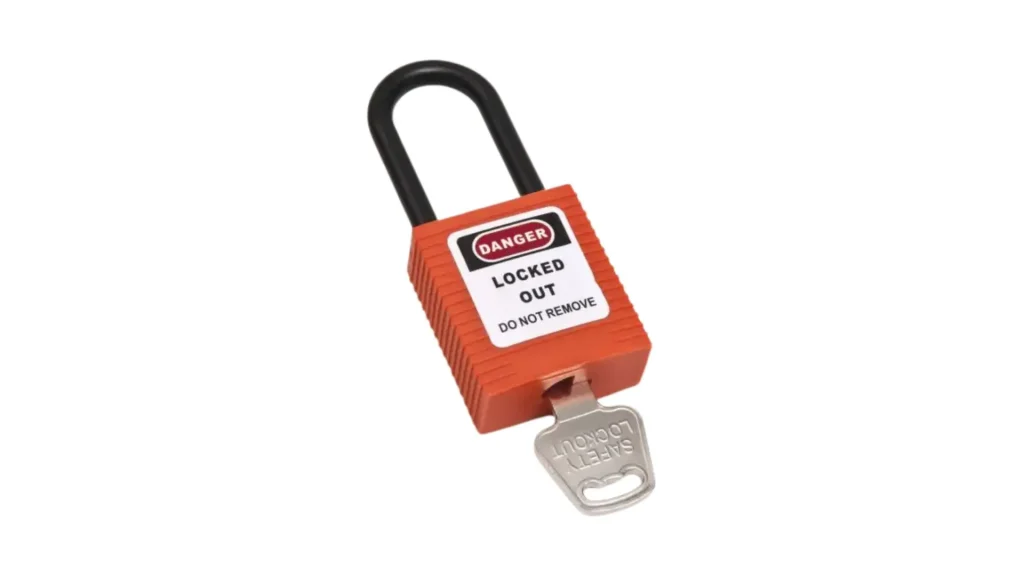
Now, back to the “padlock.” Lockout padlocks aren’t just ordinary padlocks painted red.
Grainger offers various types of LOTO padlocks, including:
- Nonconductive plastic body padlocks
- Aluminum body padlocks
- Heavy duty steel body padlocks
- Cable shackle padlocks
- Keyed alike padlocks
- Keyed different padlocks
The choice of material and configuration can be tailored to the environmental conditions and needs of the facility.
Grainger also explains that selecting a LOTO padlock requires considering factors such as durability, identification, and safety.
9. Tagout Tag: Why Isn’t a Padlock Alone Enough?
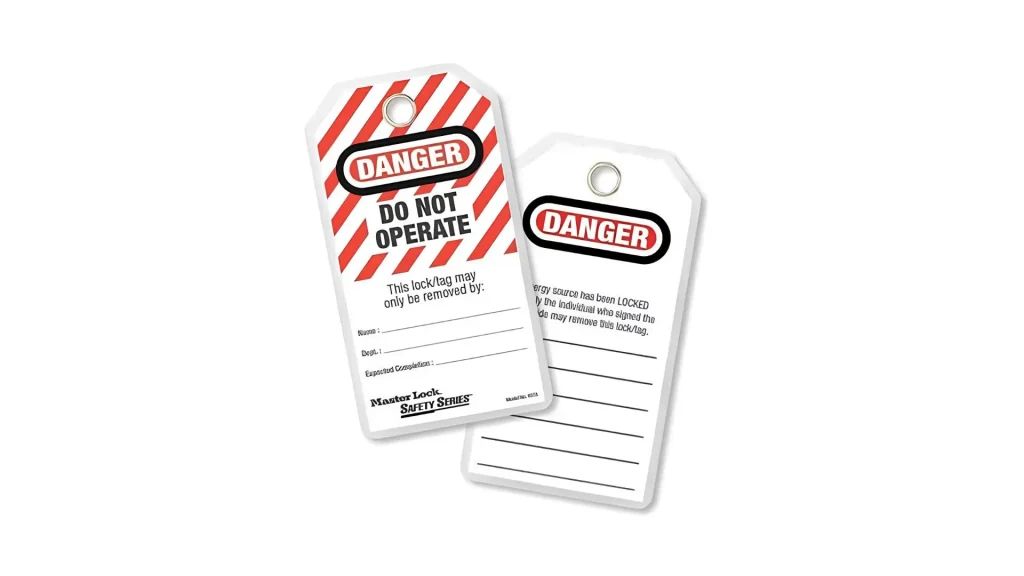
Tagout tags provide information and warnings indicating that equipment is in a lockout/tagout state.
Tags help indicate that:
The equipment is undergoing maintenance and must not be operated.
Grainger offers hundreds of types of tagout tags used in conjunction with LOTO systems to identify equipment that is being locked or tagged out.
However, there is an important point:
Tags are not a substitute for physical lockout when the equipment is capable of being locked.
OSHA explains that tags are essentially warning devices and do not provide physical restraint like a lock does. Therefore, the limitations of tags must be understood within the energy control program.
10. Lockout Station & Kit
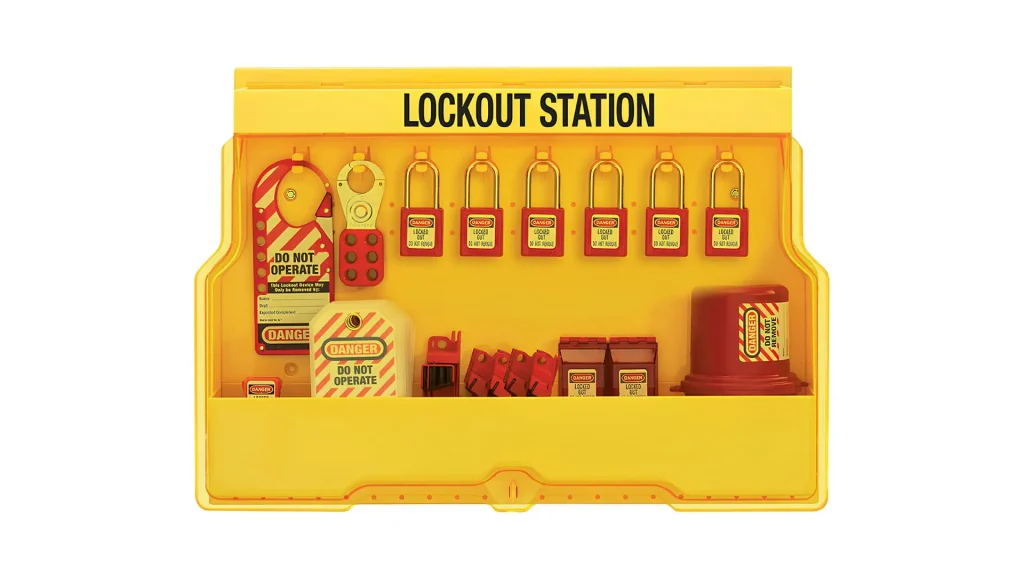
Storing LOTO devices in a scattered manner creates new problems.
Technicians find themselves asking:
“Where are the lockouts?”
Followed by:
“Where is the hasp?”
“We’re out of tags.”
“Whose toolbox has the padlock?”
To address this, facilities can use lockout stations or LOTO kits to store necessary devices in a single location.
Grainger explains that lockout stations and kits are designed to make various LOTO devices easy to identify and store in one place, suitable for both fixed locations and portable job sites.
This is not merely a matter of tidiness; access to safety devices also impacts the maintenance team’s readiness.
Are There Standards for LOTO Padlock Colors?
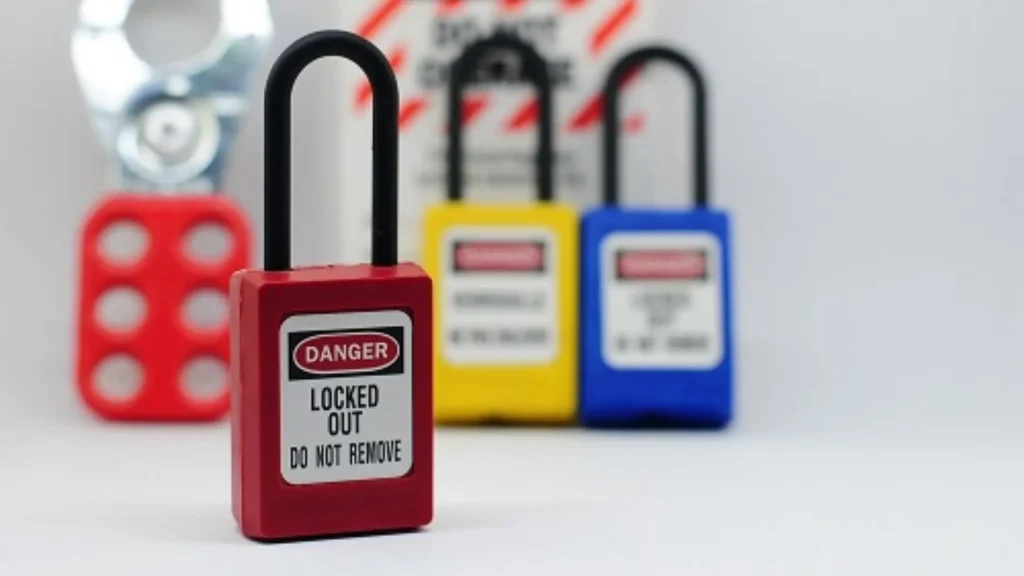
Interestingly, there is no single universal industry standard for color coding that automatically applies to all facilities.
Grainger notes that while LOTO padlocks come in various colors, there is no universal industry standard governing their use.
Therefore, companies should implement a site specific identification system.
For instance, a company might designate:
- Red → Maintenance
- Blue → Electrical
- Green → Instrument
However, these color examples do not constitute a universal rule.
What matters most is that the colors, labels, numbers, or identifiers remain consistent with company procedures, ensuring the locks are clearly recognizable.
LOTO for a single machine may require more than one device.
This is the aspect that often complicates LOTO systems. A single machine may involve:
- Electrical
- Pneumatic
- Hydraulic
- Stored mechanical energy
This means a single maintenance procedure may require multiple isolation methods.
OSHA explicitly states that equipment can have more than one hazardous energy source; all such sources must be locked out/tagged out, and stored energy must be released or controlled before servicing work begins.
Examples:
- Production machine
- Electrical supply
- Electrical lockout
- Compressed air
- Pneumatic lockout
- Hydraulic pressure
- Hydraulic isolation
- Stored mechanical energy
- Blocking/restraint in accordance with procedures
Then:
Verification → Maintenance → Restoration
This is why a LOTO process must begin with an energy assessment, not with the purchase of padlocks.
How to Determine the Right LOTO Device?
Follow this simple workflow.
- STEP 1 — Identify Equipment
Which machine requires maintenance? - STEP 2 — Identify All Energy Sources
Do not look only for electrical sources. Also check for:- Pressure
- Hydraulics
- Pneumatics
- Gravity
- Springs
- Rotational energy
- Thermal energy
- Chemical energy
- Other stored energy
- STEP 3 — Locate Energy Isolating Devices
Identify the points where energy sources can be physically isolated. - STEP 4 — Determine the Type of Lockout Device
Does the task require:- Electrical lockout?
- Valve lockout?
- Pneumatic lockout?
- Cable lockout?
- A hasp?
- A group lockbox?
- STEP 5 — Determine Personal Locks & Tags
Every authorized employee must follow the identification and personal lock usage system in accordance with company procedures. - STEP 6 — Determine Storage
Ensure that LOTO devices are available and easily accessible when needed.
What happens if maintenance is performed by multiple technicians?
Group LOTO requires special attention.
OSHA mandates group lockout/tagout procedures that ensure every authorized employee receives individual protection. In group LOTO, each authorized employee applies a personal lock to the group lockout device, group lockbox, or comparable mechanism when starting work and removes it upon completion.
This means:
Using a single lock for an entire team is not an appropriate approach to replace personal control in group LOTO.
The system must enable every person working in the area to maintain control in accordance with the procedures.
What about the shift change?
This aspect is also often overlooked.
Picture this:
Shift 1: Technician A is performing maintenance.
Shift 2: Technician B takes over.
Without a clear handover procedure, who actually has control over the lockout?
OSHA mandates specific procedures for shift or personnel changes to ensure continuous LOTO protection and an orderly transfer of safety responsibility between outgoing and incoming workers.
Therefore, LOTO is not merely a matter of hardware.
Procedures, equipment, communication, and training must all work in tandem.
Common Mistakes When Selecting LOTO Devices
- Purchasing Only Padlocks
A padlock is merely one component of the system. - Using the Same Lockout for All Machines
Different equipment may have different energy isolating devices. - Isolating Only Electrical Energy
Machines can involve pneumatic, hydraulic, gravitational, thermal, or other forms of stored energy. - Using Tags Instead of Locks Without Procedural Basis
Tags do not provide the physical restraint that locks do. - Overlooking Group Maintenance
Work performed by multiple people requires an appropriate group LOTO mechanism. - Lacking a Storage System
Safety devices that are difficult to locate when needed will hinder the implementation of procedures.
Selecting LOTO Based on Work Area Requirements
| Condition | Devices worth considering |
| Circuit breaker | Electrical lockout |
| Electrical plug | Plug lockout |
| Valve | Valve lockout |
| Compressed air | Pneumatic lockout |
| Multiple technicians | Lockout hasp |
| Group maintenance | Group lockbox |
| Various isolation points | Cable lockout |
| Identifikasi equipment | Tagout tag |
| Many LOTO devices | Lockout station/kit |
| Personal energy control | LOTO padlock |
Why Choose LOTO Products from Grainger?
Grainger offers an extensive LOTO category, ensuring that energy control needs are met by more than just a single type of product.
Grainger’s current catalog includes lockout padlocks, electrical lockouts, valve lockouts, cable lockouts, steering wheel lockouts, flange lockouts, gas cylinder lockouts, pneumatic lockouts, lockout hasps, group lockout boxes, tagout tags, as well as lockout stations and kits.
The advantage of this approach is that companies can select devices based on application and isolation points, rather than simply by product form.
For industrial requirements, this type of selection is far more important than merely looking for “cheap LOTO padlocks.”
Grainger Lockout/Tagout at Panca Makmur Baru
Panca Makmur Baru provides Grainger solutions for Lockout/Tagout, safety, MRO, tools, and industrial equipment needs in Indonesia.
If you require LOTO padlocks, electrical lockouts, valve lockouts, pneumatic lockouts, lockout hasps, group lockout boxes, tags, or LOTO kits, contact the PMB team to help find the right products for your application requirements.
Want to know more or place an order? Contact us at PT Panca Makmur Baru—the official Grainger distributor in Indonesia. Click the “Contact Us” button now!