
Maintenance Mistakes That Damage Hand Tools & How to Prevent Them | PT Panca Makmur Baru
Have you ever encountered situations like these?
- A ratchet starts to bind or feel stiff.
- A socket begins to rust.
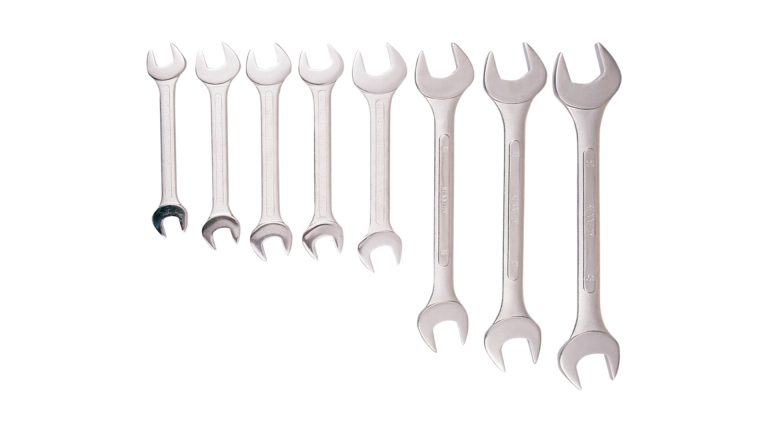
- A wrench becomes deformed.
- Pliers feel loose.
- A screwdriver no longer grips the screw head effectively.
Yet, these aren’t cheap tools. This raises the question: “Are the tools themselves of poor quality?”
In a maintenance environment, the lifespan of hand tools is determined by more than just their material and manufacturing quality; how they are used, cleaned, inspected, and stored plays a crucial role as well.
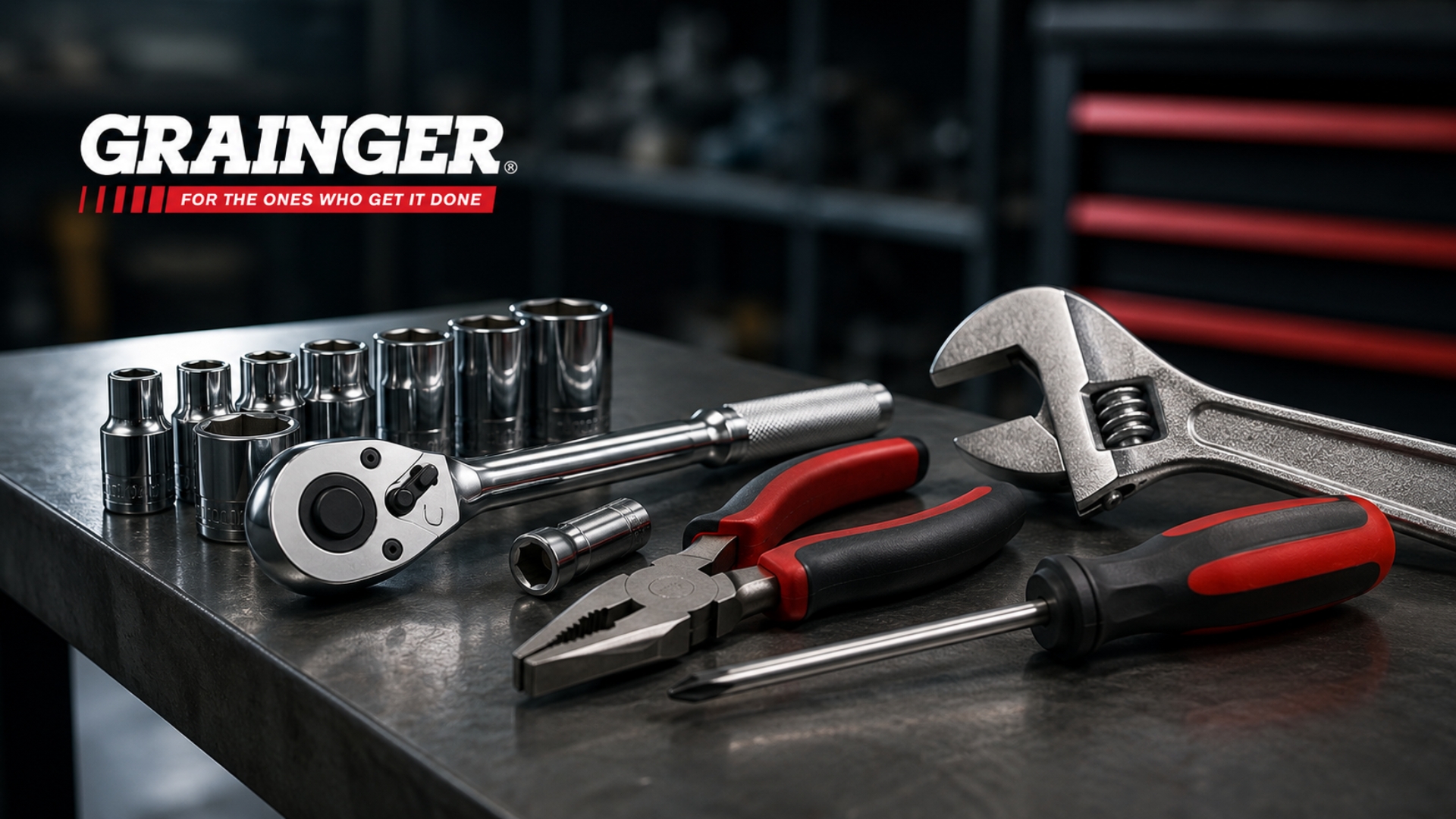
Grainger, for instance, classifies hand tools as essential components of maintenance, repair, and construction work, with a product range spanning wrenches, screwdrivers, ratchets, pliers, hammers, and sockets, all the way to replacement parts.
This implies that when hand tools are integral to daily maintenance activities, tool management should be treated as an integral part of the maintenance process itself.
And this is precisely where many mistakes occur.
Using Tools for Tasks They Were Not Designed For
This is perhaps the most common mistake.
- Using a screwdriver as a pry bar.
- Using pliers instead of a wrench.
- Striking a wrench with a hammer to increase leverage.
- Using pliers to grip and turn fasteners.
It might seem practical. The problem is that every hand tool is designed with specific geometry, materials, and usage capacities.
For instance, pliers are not designed to replace wrenches for tightening or loosening nuts and bolts. Grainger specifically warns that using pliers to tighten nuts or bolts can damage the fastener; likewise, pliers should not be used as a hammer.
The same applies to sockets and ratchets. When a fastener requires a specific torque, using an unsuitable tool simply because “it gets the job done” increases the risk of damaging both the fastener and the tools.
The simple principle is this:
Using the right tool does more than just make the job easier; it ensures that both the tool and the fastener function exactly as designed.
Forcing Tools When a Fastener Is Stuck
This is a common yet often overlooked cause of damage to hand tools. When a bolt won’t budge, the initial reaction is usually: “Apply more force.”
- The handle gets extended.
- It gets struck.
- It gets pulled harder.
- Or another tool is even used as an extension.
However, a stuck fastener can actually be caused by:
- corrosion,
- thread damage,
- overtightening,
- galling,
- contamination,
- or using the wrong tool size.
Grainger explains that using the correct socket helps reduce the risk of rounding or stripping the fastener, as a properly fitted socket grips the fastener head more effectively.
So, before applying more force, diagnose the problem first. Is it the fastener that is the issue? Or is the tool being used incorrect?
Using an Incorrectly Sized Socket
This is often treated as a trivial matter. For instance, a bolt might require a 14 mm socket; however, because a 14 mm one isn’t available, a “close enough” size is used instead.
Initially, it might still be possible to turn the bolt. However, improper clearance prevents force from being distributed correctly across the fastener head.
The result: the fastener head can become rounded.
And once the bolt head is damaged, a simple task turns into a fastener extraction job.
Grainger also recommends using a socket that matches the exact fastener size to help prevent stripped or damaged fasteners.
Using a Ratchet Instead of a Breaker Bar
While ratchets are indeed used to apply rotational force, they are not suitable for every situation.
When a fastener is extremely tight or seized, applying excessive force with a ratchet can subject the tool to loads that exceed its intended design limits.
In such cases, use a tool specifically designed to provide greater leverage, in accordance with established work procedures.
Once the fastener has been successfully loosened, the ratchet can then be used for the subsequent steps of the task.
Speed does not equate to correctness.
In maintenance, selecting a tool based on the condition of the fastener is far more important than simply finding a tool that can get the bolt moving.
Allowing Dirt to Accumulate
Hand tools may appear simple, but specific areas such as ratchet mechanisms, socket drives, plier joints, threads, knurling, and locking mechanisms require attention. Dust, grease, chemical residues, metal particles, and other contaminants can accumulate if tools are not cleaned after use.
Grainger emphasizes that routine cleaning and inspection are essential components of proper tool management. Under the 5S methodology, tools are sorted, organized, cleaned, standardized, and maintained on an ongoing basis.
Therefore, cleaning hand tools is about more than just keeping the toolbox looking tidy; it is an integral part of preventive maintenance.
Viewing Rust Merely as an Aesthetic Issue
This is a common occurrence. Tools begin to show spots of rust, yet the assumption is often, “They can still be used.” However, corrosion is not merely an aesthetic issue.
If left unchecked, corrosion can affect the surfaces and internal mechanisms of the tools. For tools requiring precise engagement, damaged surfaces can compromise how the tool interacts with fasteners.
Therefore, storage in a dry location and protection against moisture are crucial aspects of tool maintenance.
Tools kept in a humid workshop require more attention than those stored in a dry, controlled environment.
Storing Tools Carelessly
These are common mistakes made after a job is finished:
- All tools are tossed into a single toolbox.
- Sockets get mixed up.
- Ratchets get buried under other items.
- Wrenches bang against each other.
- Pliers end up on top of screwdrivers.
- There is no storage system in place.
The problem goes beyond just the difficulty of finding tools.
Tools are also more prone to:
impact → scratches → damage → loss → becoming unaccounted for.
Grainger recommends organized tool storage to protect equipment, maintain accessibility, and reduce the risk of tool damage or loss.
For tool sets, Grainger offers various solutions such as tool cabinets, chests, boxes, bags, and foam inserts that help keep tools organized and protected.
Failure to Inspect Tools Before Use
Maintenance tools doesn’t mean just cleaning the tools. There is one step that is much more important: Inspection. Before use, pay attention to conditions such as:
| Wrench | Socket | Ratchet | Pliers | Screwdriver |
| Does the jaw change shape? | Is the square drive still in good condition? | Is the mechanism still functioning normally? | Is the joint too loose? | Is the tip worn out? |
| Are there any cracks? | Is the socket cracked? | Does the forward/reverse selector work? | Is the cutting edge damaged? | Did the tip break off? |
| Is the working surface worn? | Has the hex section undergone deformation? | Are there any abnormal conditions on the head? | Is the handle in good condition? | Is the handle damaged? |
If there is any damage that could affect functionality or safety, do not force the tool into use.
Grainger also emphasizes the importance of inspection processes and the replacement of tools that are no longer in good condition as part of a tool management system.
Not Distinguishing Between Standard Hand Tools and Torque Control Tools
- Some tasks can be adequately handled with a ratchet.
- Other tasks require a torque wrench.
These are not the same thing. A ratchet is used to manually tighten or loosen fasteners.
However, when a task involves a torque specification, the final tightening should be performed using an appropriate torque wrench.
Grainger also notes that when a torque specification is provided, using a torque wrench with the correct socket helps ensure the fastener is tightened to the required level.
For example:
- Ratchet → fastening process
- Torque wrench → final torque control
This type of workflow is far more accurate than attempting to estimate torque based solely on feel.
Does Not Have a Tool Management System
This is arguably the biggest challenge for companies employing large numbers of technicians. Effective tool maintenance goes beyond just physical condition; it also addresses questions such as:
- Who is using the tools?
- Where are the tools stored?
- Are the tools returned after use?
- Have damaged tools been set aside?
- Is there a record of missing tools?
- When are the tools inspected?
Grainger recommends the 5S approach for tool management Sort, Set in Order, Shine, Standardize, and Sustain. Implementing this system can enhance safety, efficiency, and quality while reducing costs associated with lost or damaged tools.
In short: A disorganized toolbox is not merely an issue of tidiness; it is simultaneously a maintenance and inventory management problem.
Buying New Tools Before Identifying the Cause of Premature Failure
When tools break down quickly, the easiest solution is simply to buy new ones.
However, if the new tools encounter the same problem a few months later, the issue likely doesn’t lie with the tools themselves.
It could be due to:
- improper usage.
- poor storage.
- a highly corrosive environment.
- the wrong tool choice for the application.
- a lack of routine inspections.
- or using the tools beyond their intended function.
This is why preventive maintenance isn’t just for machinery; the tools used to maintain that machinery require maintenance as well.
Hand Tool Maintenance Checklist for Workshops and MRO Teams
To make it easier to implement, use the following simple checklist:
| Inspection | Frequency |
| Cleaning tools after use | Each use |
| Checking for cracks/deformation | Before use |
| Checking for rust/corrosion | Routine |
| Checking the ratchet mechanism | Routine |
| Ensure the socket matches the fastener size. | Every job |
| Separating damaged tools | Soon |
| Return tools to storage | After use |
| Checking the completeness of the tool set | Routine |
| Checking frequently used tools | Periodical |
| Reviewing replacement needs | Subject to conditions |
For companies with a large number of technicians, this checklist can be developed into a more formal inspection program tool.
How Does Grainger Support Industrial Hand Tool Needs?
When it comes to hand tools for maintenance, companies rarely require just a single type of tool.
Tools are also prone to various issues:
getting bumped → scratched → damaged → lost → becoming unaccounted for.
Therefore, a more effective approach is to assess needs based on the maintenance workflow rather than simply looking for a single product.
Grainger offers an extensive range of hand tools, including wrenches, screwdrivers, ratchets and drive tools, pliers, hammers, files, pry bars, clamps, tool sets, and replacement parts, as well as inspection and retrieval tools.
Grainger also provides various general maintenance tool sets designed for inspection, servicing, and repair tasks involving machinery, mechanical systems, and structural components.
This means that for procurement and MRO needs, tools can be selected based on specific job requirements rather than being limited to a single product category.
Don’t Just Buy Hand Tools. Build a Tool Management System
Even high quality hand tools require proper handling. If quality tools are:
- used for purposes other than intended,
- forced beyond their capacity,
- left uncleaned,
- stored haphazardly, or
- not inspected,
their service life can still be reduced.
Conversely, when a company combines the right tools with proper usage, inspection, cleaning, storage, and tool management, the investment in hand tools can be utilized far more optimally.
This is the approach that should be adopted across workshops, maintenance departments, engineering teams, and facility management, as well as in MRO procurement.
Looking for hand tools for industrial maintenance needs?
PT Panca Makmur Baru provides industrial supply and MRO solutions—including hand tools—through Grainger.
Grainger offers a wide range of hand tools for various maintenance, repair, and operational support needs, allowing companies to select the right tools based on the type of work, fastener sizes, work environment, frequency of use, and specific technician requirements.
If you are procuring hand tools for your company, avoid simply sending a request like: “Please send a hand tools catalog.”
It is far more effective to provide details such as: the type of work, number of technicians, specific tools required, sizes, usage requirements, and the work environment.
This ensures more accurate tool selection and prevents the purchase of tools that do not actually meet your needs.
Want to know more or place an order? Contact us at PT Panca Makmur Baru—the official Grainger distributor in Indonesia. Click the “Contact Us” button now!