
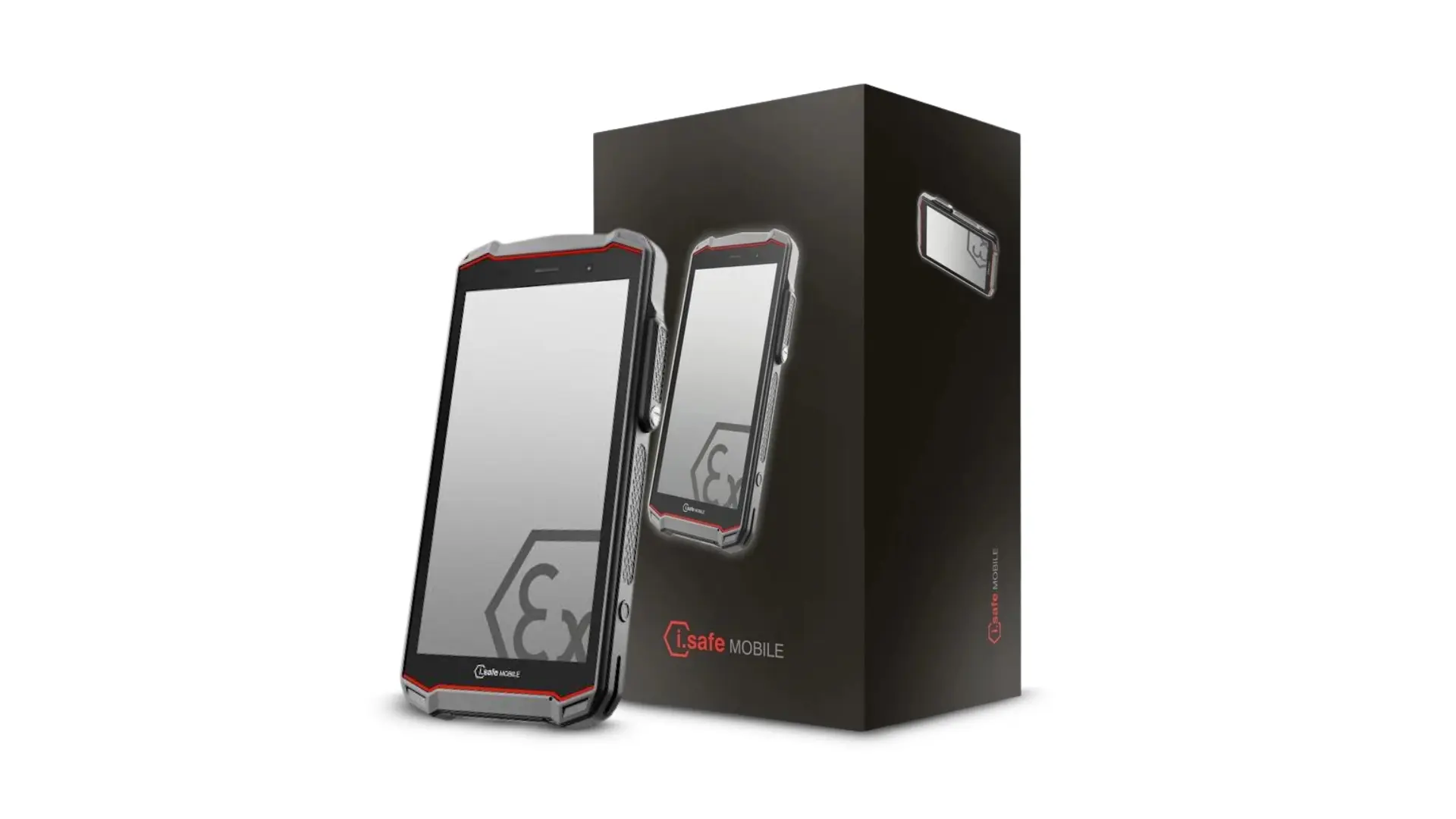
Review of i.safe MOBILE Zone 1/21: Explosion-Proof Smartphone for Industrial Areas | PT Panca Makmur Baru
In industrial environments, smartphones are no longer merely tools for making calls or sending messages. In oil and gas facilities, petrochemical plants, and certain process industries, the presence of flammable gases, vapors, or dust necessitates that safety be a primary consideration when selecting electronic devices. Even a smartphone with a rugged exterior does not automatically meet the requirements for use in such areas.
One brand that develops communication devices for these specific needs is i.safe MOBILE, a German manufacturer that provides smartphones, mobile phones, tablets, and supporting equipment designed for various hazardous area classifications.
One of their product categories includes devices for Zone 1/21 areas subject to specific requirements due to the potential presence of explosive gas or dust atmospheres.
Getting to Know i.safe MOBILE and Explosion-Proof Smartphone Technology
i.safe MOBILE develops communication devices for professional use, including in industrial environments that require protection against potential explosions.
Unlike consumer smartphones which typically prioritize design, camera capabilities, and performance devices intended for hazardous areas must also meet safety requirements dictated by their specific usage classification and certifications.
The i.safe MOBILE portfolio encompasses several categories, including:
- Zone 1/21: devices approved for specific gas and dust hazardous area classifications.
- Zone 2/22: devices approved for different categories of hazardous areas.
- Industrial: devices designed for general industrial needs, depending on the specific model’s specifications.
- Mining: devices intended for specific mining requirements, with certifications that must be verified against the intended operating environment.
This means that the same brand name does not guarantee that all its devices carry identical certifications. The specific model used must align with the conditions of the area and the applicable safety requirements.
Understanding Hazardous Area Classification: Zone 1/21
Before selecting an explosion-proof smartphone, it is important to understand that Zone 1 and Zone 21 refer to different types of hazards.
These classifications relate to the likelihood of an explosive atmosphere forming under specific operating conditions. Zone designation is determined through an area assessment, rather than being based solely on the type of industry.
1. Zone 1: Areas with a potential explosive gas atmosphere
Zone 1 refers to an area where an explosive gas atmosphere is likely to occur occasionally during normal operations.
Such areas may be found in specific sections of oil and gas facilities, petrochemical plants, or process industries that handle flammable substances. However, a Zone 1 designation must always align with the official classification of the facility in question.
2. Zone 21: Areas with a potential explosive dust atmosphere
Zone 21 refers to an area where a combustible dust atmosphere in the form of a dust cloud is likely to occur occasionally during normal operations.
This condition may be relevant in industrial processes that handle flammable materials in powder or particulate form, depending on the characteristics of the substances involved and the results of the area assessment.
Differences Between Zone 1 and Zone 21
| Aspect | Zone 1 | Zone 21 |
| Type of hazard | Flammable gas or vapor | Combustible dust |
| General conditions | An explosive gas atmosphere may occur occasionally during normal operations. | An explosive dust atmosphere may occur occasionally during normal operations. |
| Items to be inspected | Gas groups, temperature classes and Ex markings | Dust groups, surface temperature limits, and Ex markings |
| Equipment selection | Must be in accordance with the approval for gas atmospheres | Must comply with approval for dust atmospheres |
Zone 1/21 does not mean that a device can be used freely in all hazardous areas. The Ex marking, gas or dust group, temperature class, ambient temperature, and any special conditions must still be verified.
Why Can’t Standard Smartphones Be Used Directly in Zone 1/21?
Standard smartphones and explosion-proof smartphones may share similar features, such as a robust build, a bright display, and modern connectivity. However, physical durability is not the same as protection against the risk of igniting an explosive atmosphere.
Electronic devices may contain components or operating conditions that must be taken into account during a safety assessment. Consequently, devices intended for use in hazardous areas must be designed and certified in accordance with applicable standards.
It is important to distinguish between the following three aspects:
- Physical durability. Protection against dust, water, and impact helps a device withstand field conditions; however, this does not confirm its suitability for an explosive atmosphere.
- Protection against ignition risks. “Ex-certified” devices are designed to meet specific protection requirements, ensuring they are suitable for use in designated explosive atmospheres.
- Model certification. Safety approvals apply only to the specific models and configurations detailed in the relevant documentation. Certification should not be assumed to extend to all devices from a particular brand.
This is why a smartphone with an IP68 rating or a “rugged” designation cannot automatically be used in Zone 1/21 environments.
i.safe MOBILE IS540.1 Review: 5G Smartphone for Zone 1/21
One model worth discussing is the i.safe MOBILE IS540.1, a smartphone designed for professional use in Zone 1/21.
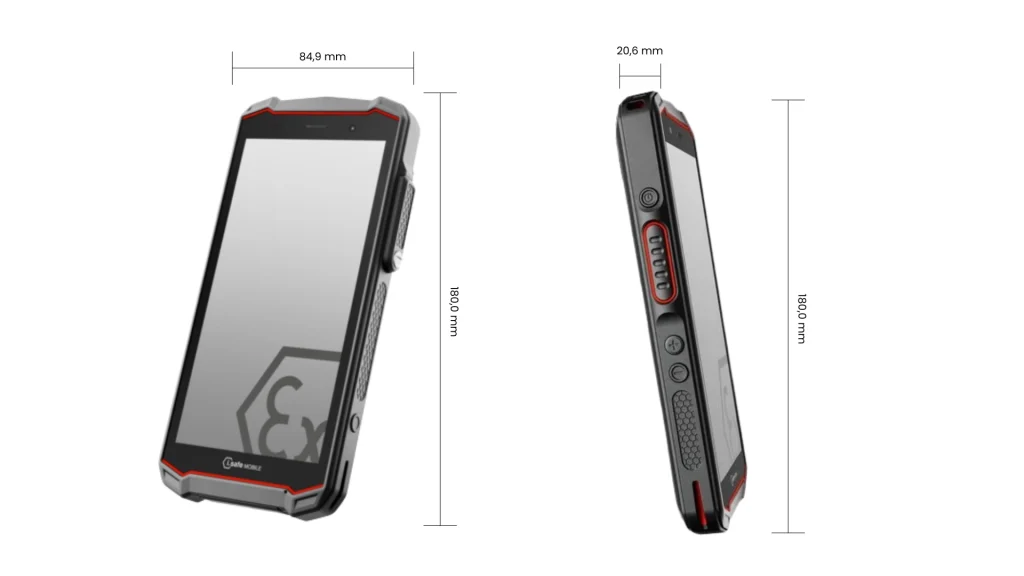
According to the manufacturer’s official specifications, the device supports 5G connectivity and features a 6-inch Full HD display, a 48 MP rear camera, a replaceable battery, and an interface for specific, approved accessories.
Key specifications of the IS540.1
| Specifications | Details |
| Category | Smartphone Zone 1/21 |
| Certification | ATEX and IECEx, in accordance with product marking |
| Operating system | Android 14 |
| Processor | Qualcomm QCM6490 Octa-Core |
| RAM | 12 GB |
| Internal storage | 256 GB, support microSD |
| Display | 6 inci Full HD |
| Rear camera | 48 MP autofocus |
| Battery | 4,400 mAh, replaceable |
| Specialized connectivity | Support for 450 MHz, in addition to other networks listed in the datasheet |
| Physical protection | IP68 and MIL-STD-810H |
What distinguishes the IS541.1 from the IS540.1?
A notable difference lies in the memory configuration and the support for the 450 MHz frequency band in the IS541.1.
This feature does not automatically make the IS541.1 superior for every requirement; its benefits depend on the existing communication infrastructure, the frequency bands in use, and specific operational needs at the site.
For general 5G smartphone requirements in hazardous areas, the IS540.1 is a model worth considering. Meanwhile, the IS541.1 warrants attention in cases where its specific frequency support aligns with the communication system being employed.
Ultimately, both devices should be evaluated based on their certifications, configurations, and site specific requirements, rather than solely on differences in their technical specifications.
ATEX and IECEx: What Do They Mean for i.safe MOBILE Smartphones?
When searching for explosion-proof mobile phones, the terms ATEX and IECEx frequently appear in product descriptions. Both relate to safety requirements for equipment used in explosive atmospheres, yet they represent distinct systems.
- ATEX
ATEX refers to the European Union’s regulatory framework for equipment intended for use in potentially explosive atmospheres. - IECEx
IECEx is an international certification system that utilizes IEC standards concerning explosive atmospheres. This system involves assessing the conformity of equipment through a process defined within its certification scheme.
Why are these two terms important?
Certification helps demonstrate that a model has been assessed against the requirements applicable to a specific use case. However, the mere presence of an ATEX or IECEx logo is not sufficient to guarantee suitability for all locations.
For the IS540.1 and IS541.1, the manufacturer provides approvals covering both gas and dust environments. Nevertheless, their use must still strictly adhere to the Ex markings, certificates, ambient temperature ranges, and any other limitations applicable to each specific model.
IP68 and MIL-STD-810H: How Do They Differ from Explosion-Proof Certification?
In addition to Ex certification, industrial devices often feature an IP68 rating and meet MIL-STD-810H testing standards. Each of these serves a different purpose.
| Term | Main function |
| IP68 | Indicates the level of protection against the ingress of dust and water, based on applicable test conditions. |
| MIL-STD-810H | Environmental testing standards for evaluating resistance to specific conditions depend on the test method used. |
| ATEX/IECEx | Regarding the suitability of equipment for explosive atmospheres, in accordance with its certification and classification |
In other words, an IP68 rating is not proof that a smartphone is safe for use in Zone 1/21. The same applies to the MIL-STD-810H standard, which does not serve as a substitute for Ex certification.
For devices such as the IS540.1 and IS541.1, physical durability and approval for use in hazardous areas are distinct yet equally important aspects.
When using these devices, always adhere to the manufacturer’s manual and specified limitations. Do not assume that a device is immune to all impacts, extreme temperatures, or exposure to liquids simply because it carries a particular rating.
In Which Industrial Areas Can i.safe MOBILE Zone 1/21 Be Relevant?
The requirements for communication devices vary depending on the characteristics of a given area. Below are examples of sectors that may include locations classified as hazardous areas:
- Oil and gas industry
Certain sections of oil and gas facilities may contain atmospheres with flammable gases or vapors. Appropriate devices can facilitate communication and digital documentation, provided they are used in accordance with the area classification and established safety procedures. - Petrochemical and chemical industries
Processes involving flammable materials may require areas with specific protection measures. The selection of devices must take into account the gas or dust classification, as well as the operational conditions defined by the facility. - Certain process and manufacturing industries
Some manufacturing facilities may contain areas involving solvents, flammable vapors, or dust that could potentially form an explosive atmosphere. However, not all areas within a manufacturing facility are classified as Zone 1/21. - Areas involving the processing of powdered materials
For processes that handle flammable powders or dust, the dust-related area classification is a critical factor. A “Zone 21” designation applies only if it aligns with the official classification for that specific location.
The use of equipment in these sectors does not imply that an entire facility must exclusively use Zone 1/21 rated smartphones. Devices must be selected based on an assessment of the specific area and the safety requirements of each individual location.
How to Understand i.safe MOBILE Product Options?
i.safe MOBILE offers more than just one type of device. Its product line includes smartphones, mobile phones, tablets, professional communication devices, and specialized accessories designed for various area categories.
Below is a brief overview of some of the models and categories you can explore:
| Model/category | Key characteristics |
| IS540.1 | 5G smartphone with a 6 inch display and Zone 1/21 approval |
| IS541.1 | Zone 1/21 smartphone with 450 MHz frequency support and various memory configurations |
| IS120.1 | Mobile phone for Zone 1/21 with a simpler design compared to large screen smartphones |
| IS930.1 | 8 inch tablet for Zone 1/21, designed for purposes including industrial applications and maintenance tasks. |
This comparison demonstrates that device requirements do not necessarily have to be met by smartphones with the highest specifications. Factors such as the device’s form factor, screen size, communication needs, and the classification of the area in which it will be used can lead to different choices.
Get i.safe MOBILE products through PT Panca Makmur Baru
Selecting an explosion-proof smartphone requires an understanding of area classifications, certifications, and model specifications. Consequently, accurate product information is a crucial component of the procurement process for industrial devices.
PT Panca Makmur Baru provides information on the i.safe MOBILE brand via a dedicated page on the PMB website.
If your company requires Zone 1/21 smartphones, industrial mobile phones, or tablets for work environments with specific protection requirements, please contact our administration team for further information.
Want to learn more or place an order now? Contact us at PT Panca Makmur Baru – an official distributor for i.Safe Mobile. Click the “Contact Us” button now!

