Genuine vs. Counterfeit SATA: 7 Ways to Verify the Authenticity of Tools Before Buying Don’t Just Rely on the Logo | PT Panca Makmur Baru
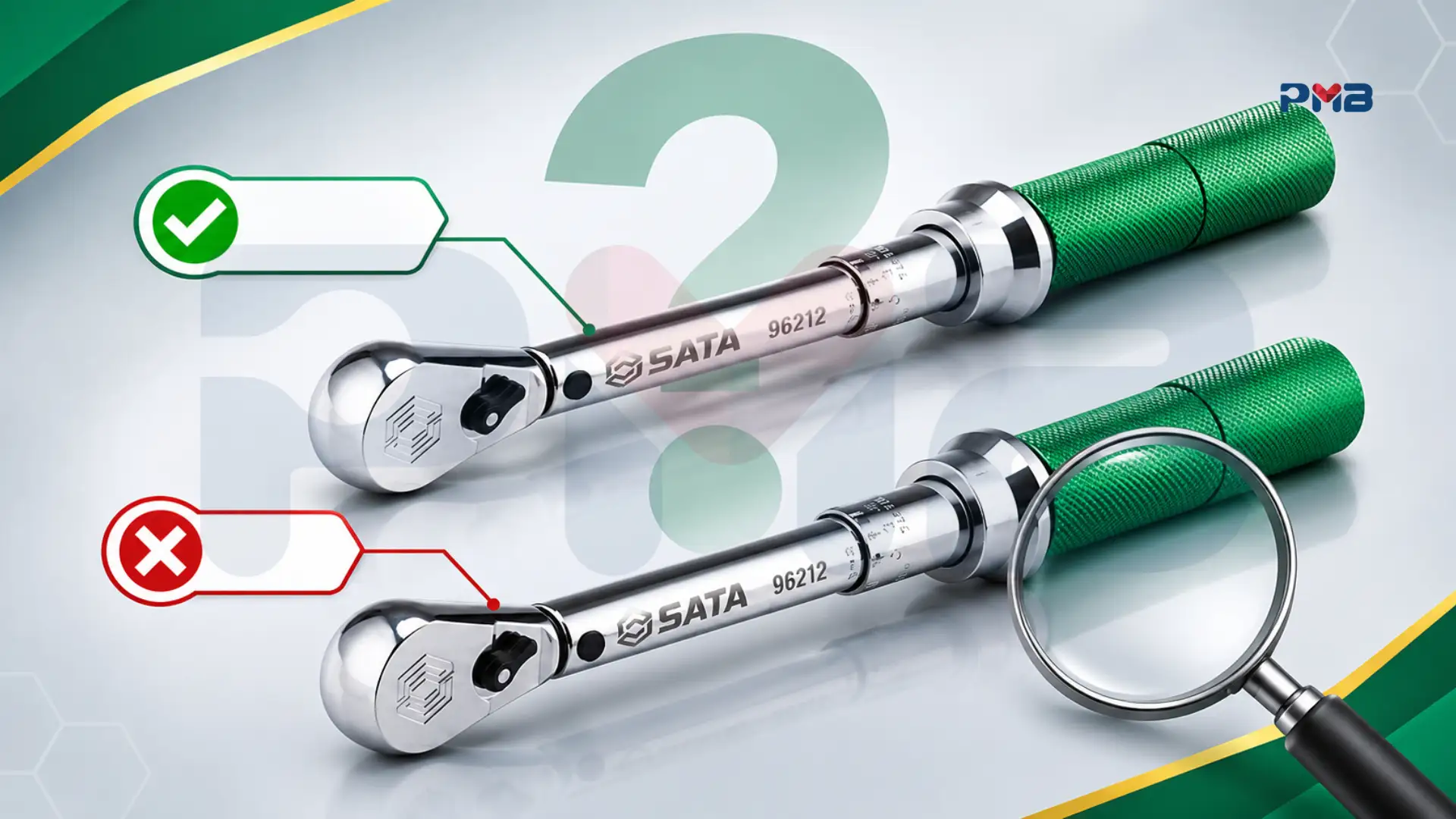
Two tools both bear the SATA logo and look similar; both are sold as “original.” But are they truly genuine products?
Tools such as combination wrenches, socket sets, ratchets, screwdrivers, and pliers are used for tasks that demand precision and safety. If a tool’s quality fails to meet specifications, it can disrupt work, risk damaging components, and even compromise the user’s safety.
The challenge is that counterfeit products are not always easy to identify based on their outward appearance alone. A neatly applied logo, convincing packaging, or a seemingly reasonable price is not enough to guarantee that a product is authentic.
So, how can you more accurately distinguish between genuine and counterfeit SATA tools?
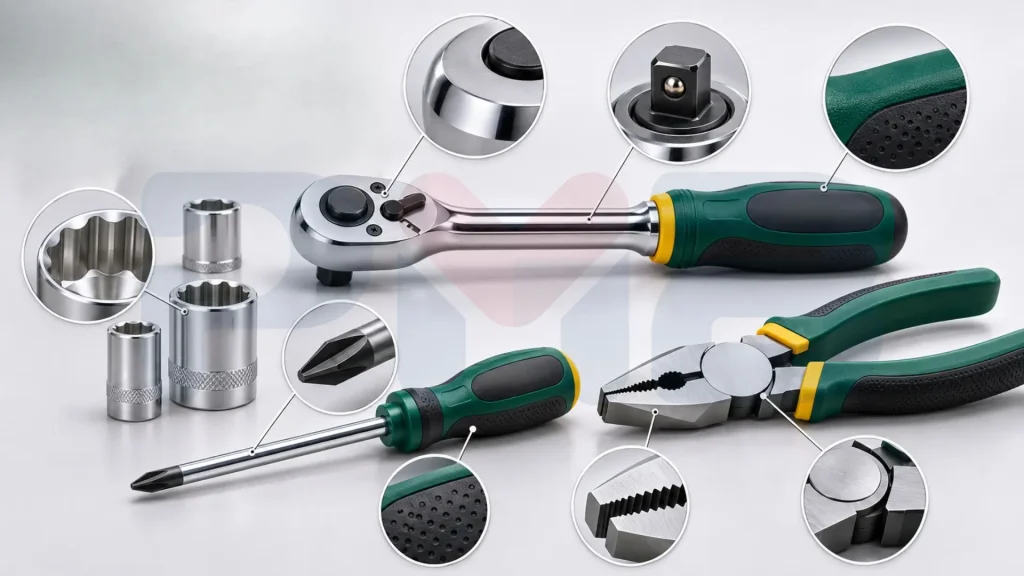
SATA Tools Original from Apex Tool Group
Before discussing the characteristics that distinguish genuine products from counterfeits, it is important to understand the manufacturer behind the SATA brand.
SATA Tools is a professional grade tool brand under the Apex Tool Group a global company that develops a wide range of hand tools and equipment for industrial applications.
SATA offers various product categories, including:
- Wrenches: Combination wrenches, adjustable wrenches, and other types of wrenches.
- Sockets & Ratchets: Socket sets, ratchet handles, extension bars, and accessories.
- Screwdrivers: Various types of screwdrivers designed for mechanical work.
- Pliers: Combination pliers, cutting pliers, needle nose pliers, and other varieties.
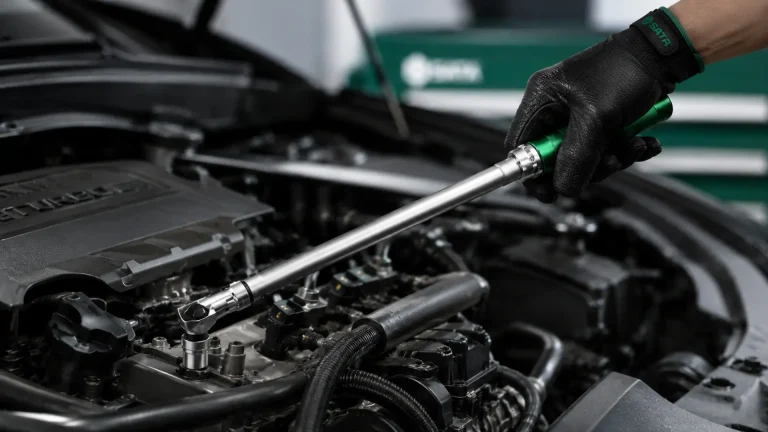
- Torque Tools: Fastening tools designed for specific torque requirements.
- Tool Sets: Comprehensive tool kits for maintenance and workshop use.
- Tool Storage: Solutions for storing and organizing tools.
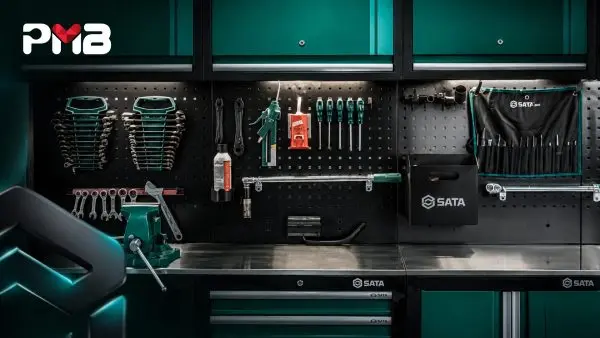
SATA products are used in a wide range of professional settings, including automotive workshops, machinery maintenance, manufacturing, and industrial facility upkeep.
However, the popularity of the brand means that buyers should exercise caution when encountering products labeled as “SATA” especially when the source of the items is uncertain.
Therefore, before making a purchase, ensure that the product can be verified through official information provided by SATA Tools / Apex Tool Group.
The Authenticity of SATA Tools: Essential for Professional Users
SATA Tools is a brand of professional grade tools under the Apex Tool Group, a global company that develops a wide range of hand tools and industrial equipment.
The SATA product lineup spans various categories, including wrenches, sockets, ratchets, screwdrivers, pliers, tool sets, and workshop equipment.
SATA tools are widely used in automotive, maintenance, manufacturing, and engineering applications. In professional settings, the quality of a tool goes beyond its outward appearance.
Tools must possess characteristics that align with their intended functions and specifications, such as:
- Precise dimensions for the components being worked on.
- Materials and manufacturing processes suited to the intended use.
- Mechanisms that function exactly as designed.
- Durability and safety when used within operational limits.
- Compliance with the standards or technical requirements specified for the product.
Products of uncertain origin create ambiguity regarding these essential characteristics. Therefore, it is crucial for users and companies to verify the source of their purchases and ensure the suitability of the products before putting them into use.
7 Ways to Distinguish Genuine SATA Products from Counterfeits Before Purchasing
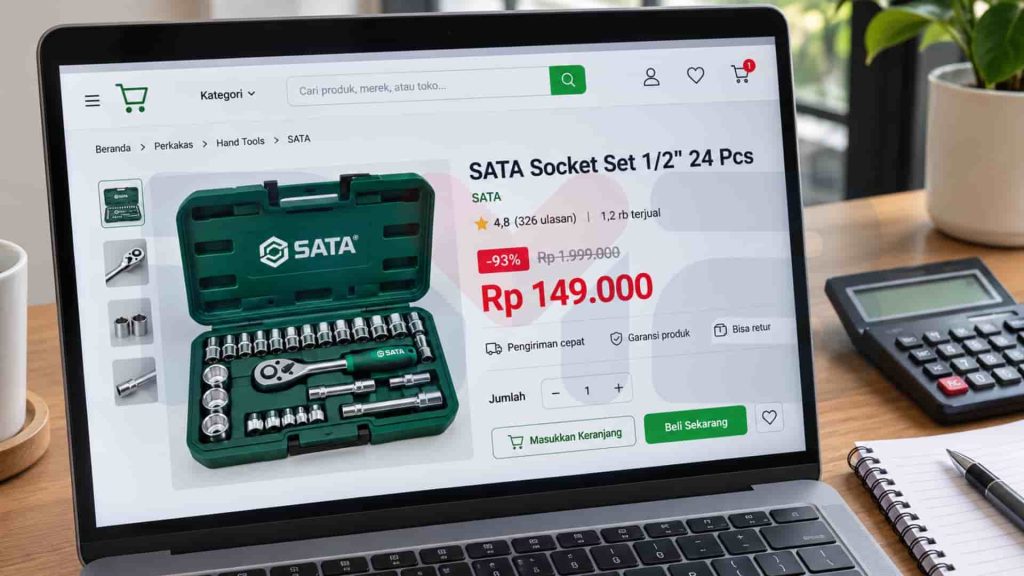
There is no single physical characteristic that serves as a universal indicator of whether a SATA product is genuine or counterfeit.
A more reliable assessment involves combining several pieces of information: product identity, model code, catalog reference, distribution source, physical condition, and purchase documentation.
Here are the steps:
1. Verify the Sales Source and Distributor Identity
This first step should be taken even before examining the product in person. Identify the company or seller offering the SATA tools.
Check whether the seller has a clear business identity, is capable of providing product information, and is willing to disclose the source of their supply.
For corporate purchases, consider verifying the following:
- The name and identity of the selling company.
- Reachable contact information.
- Alignment between the product and the offer.
- Proof of transaction or an invoice.
- Warranty information and after sales support.
- Evidence of an authorized distribution relationship, if necessary.
Why is this important?
Because product packaging and logos can be easily replicated, a well documented procurement process provides a more solid foundation for tracing the product should any issues arise.
PT Panca Makmur Baru is an official distributor of SATA Tools in Indonesia, catering to the hand tool procurement needs of various industrial sectors. At Panca Makmur Baru, customers can consult on product models, specifications, and specific purchasing requirements.
2. Verify SATA Product Codes Against the Official Catalog
The product code or SKU is one of the most critical pieces of information during verification. Every model has a unique product identity that must be cross referenced with its official specifications.
Do not rely solely on generic names like “SATA Socket Set” or “SATA Tool Kit.” Instead, locate the specific product number and compare it against the information provided in the SATA Tools catalog from Apex Tool Group.
For example, consider the following SATA product:
SATA 09555 — 23 Piece After Service Maintenance Set.
This item can be found in the SATA Tools online catalog under product number 09555, which includes a detailed list of its contents and specifications. When procuring such items, you should verify:
- The product number being offered.
- The name and type of tools included.
- The total number of items in the set.
- The size or configuration of the tools.
- The specifications listed in the catalog.
- The product or packaging imagery for the relevant version.
If a seller offers a product with a specific code, but the contents or types of tools differ from the official information, request clarification before making a purchase.
Please note: Variations may occur due to regional coding, design revisions, or packaging updates. Any discrepancies should be clarified first; they do not automatically indicate that a product is counterfeit.
3. Check the Logo, Engravings, and Identifiers on the Tools
The SATA logo is one of the most noticeable features when inspecting a product. However, there is a common misconception that needs to be addressed: a neatly rendered logo is not a guarantee of authenticity. Conversely, minor variations in markings do not automatically prove that an item is counterfeit.
Examine the information that should be present on the specific model, such as:
- The brand name and logo.
- Size markings.
- Model numbers or codes (if applicable).
- Material specifications or standards, if indicated on the product.
- The physical shape, ensuring it matches official references.
Be alert for any discrepancies, such as incorrect text, inconsistent sizing, or markings that differ significantly from the documentation for that specific model.
If in doubt, document the details and compare them against an official catalog, or consult with a distributor. Avoid determining authenticity based solely on factors like handle color, logo thickness, or typeface without having a proper point of comparison.
4. Evaluation of Finishing and Physical Condition
The finishing of a product is one aspect that can help identify potential non conformities.
For metal hand tools, an initial inspection may cover the surface condition, the tool’s working area, component joints, and operating mechanisms.
Examples include:
- Combination Wrench: Check the condition of the wrench jaws, size markings, and any visible deformation or damage.
- Ratchet: Observe the position of the directional lever, the condition of the square drive, and the functionality of the mechanism through a safe, light duty check.
- Socket: Inspect the size, the profile of the working end, and check for any cracks or surface damage.
- Screwdriver: Examine the shape of the tip, the condition of the handle, and the connection between the shaft and the handle.
However, it should be noted that a smooth finish does not automatically guarantee that a product is genuine. Conversely, tools that appear dull or scratched may simply show signs of wear resulting from storage, shipping, or prior use.
Physical inspection serves as a method to identify potential non conformities; it is not a substitute for verification by the manufacturer. Do not perform extreme tests such as applying loads until the tool breaks or exceeding its specified torque limits in an attempt to prove its authenticity.
5. Check the Packaging, Labels, and Product Information
Packaging is often the first thing a buyer notices upon receiving an item. For certain SATA products, the information on the packaging may include the product name, model, size, quantity, or other identifiers.
Compare this information against the relevant product catalog. Key points to check include:
- Does the product code on the packaging match the item itself?
- Do the quantity and type of tools match?
- Are the labels clearly legible?
- Is there any conflicting information?
- Does the condition of the packaging align with the status of the item being sold?
Professional looking packaging does not automatically guarantee a product’s authenticity. Conversely, changes in packaging design do not necessarily indicate that a product is counterfeit.
Manufacturers may update designs, modify labels, or adjust packaging based on the specific market or production period. Therefore, packaging should be evaluated in conjunction with the product code information and the source of procurement. If any suspicious discrepancies are found, seek confirmation from the distributor.
6. Beware of Unreasonably Low Prices
Price is a factor that often tempts buyers.
When a product is offered at a price significantly lower than comparable alternatives, it is natural for potential buyers to question its origins.
However, a low price does not automatically mean the item is counterfeit.
Price differences can be influenced by promotions, purchase volume, clearance of old stock, currency exchange rates, or specific sales conditions.
You should be cautious if several of the following conditions are present:
- An extremely low price with no reasonable explanation.
- The seller cannot provide clear product identification.
- Information regarding the source of the goods is inconsistent.
- There is no adequate proof of transaction available.
- The seller avoids questions about warranties or the origin of the product.
Apex Tool Group has previously issued warnings in the international market regarding the misuse of brand identity in online sales.
This highlights that verifying a seller’s credibility is just as important as comparing prices.
For industrial procurement, it is better to consider the total value of the purchase, including the assurance of specifications, after sales support, and operational risks.
7. Check Warranty Terms and Proof of Purchase
SATA Tools is known for its “Lifetime Warranty” program, which applies to specific categories of hand tools. However, not all SATA product categories automatically qualify for a lifetime warranty.
SATA’s official policy distinguishes between several product groups:
| Product Category | Examples (based on the SATA EMEA website) |
| Eligible hand tools | Lifetime Warranty |
| Accessory bits, bit holders, bit sockets, certain extensions, and cutting tools | 30 days |
| Torque products | 90 days for calibration, or 1 year for the tool itself |
| Toolboxes, carrying cases, accessories, and consumables | 1 years |
These terms are based on information published by SATA for the EMEA market. Warranty terms in Indonesia should be confirmed based on the specific product and the channel through which it was purchased.
The warranty also excludes certain conditions, such as improper use, unauthorized modifications, or damage resulting from misuse.
Therefore, before making a purchase, you should ask:
- Does this specific item come with a warranty?
- What is the duration of the warranty?
- What is covered, and what is excluded?
- What is the warranty claim procedure in Indonesia?
- What proof of purchase documentation is required?
Clear answers will help your company plan for the maintenance and replacement of tools.
While a warranty is not the sole method for authenticating a product, having proof of purchase documentation and support from an authorized distributor will assist in the verification process and the handling of any claims.
Comparison Table: Genuine SATA Products vs. Suspect Items
To facilitate an initial assessment, the following comparison guide is provided for use by technicians and purchasing teams.
| Aspect | Indicators supporting authenticity | Conditions that need to be clarified |
| Seller’s identity | The company is clearly identified, and the origin of the goods can be traced. | Inconsistent identity or the source of the goods is not explained |
| Product code | In accordance with the official catalog for the relevant model | SKU and specifications do not match |
| Logo and branding | In accordance with the official model reference | Different markings or labels without explanation |
| Physical quality | Condition in accordance with specifications and item status | Defects, deformations, or glaring discrepancies |
| Packaging | Consistent product information | The label does not match the contents |
| Price | The offer has a clear basis | Very low prices accompanied by questionable information |
| Warranty | The terms can be explained and confirmed | Warranty claim contradicts product terms |
| Transaction document | PO, invoice, and item identification are consistent | Proof of purchase is unclear |
Note: This table serves as an initial screening guide. Product authenticity cannot be determined based on a single indicator alone.
Don’t Jump to Conclusions: Counterfeit, Unofficial, and Used Goods Are Not the Same
This distinction is crucial, especially for companies making large volume purchases. Not every product that differs in condition or origin is necessarily a counterfeit.
- Counterfeit Goods
These are products that use or imitate a brand’s identity without authorization, creating the false impression that they originate from the official manufacturer. - Authentic Products from Unverified Distribution Channels
These items may be genuinely manufactured by the brand owner, but their procurement history and the availability of local support services should be verified. - Used or Reconditioned Goods
These may be authentic products that have previously been used or repaired. Their condition should not be equated with that of new items. - Old Stock
These products may feature packaging designs or model versions that differ from those in the latest catalog.
Understanding these differences prevents buyers from prematurely labeling an item as counterfeit simply because its packaging varies or it was not acquired through standard, established channels.
To ensure clarity, verify the item by checking its product identity, documentation, and assessments from authorized parties.
Why Do Products of Uncertain Authenticity Pose a Risk to the Industry?
Companies must consider impacts that extend well beyond the purchase price.
- Uncertainty Regarding Dimensions and Performance
Tools that fail to meet specifications increase the risk of incompatibility with other components. For instance, a socket that is incorrectly sized or features an improper working profile can damage a bolt head. However, this does not necessarily mean that every suspicious product is inherently defective. - Safety Risks to Technicians
Tools that fail during use can cause a technician’s hand to slip, lead to a loss of balance, or result in physical injury. For critical tasks, always use tools that meet the required specifications and have a verifiable origin. - Maintenance Disruptions
If a tool breaks or malfunctions, a technician may be forced to stop work to find a replacement. This extends turnaround time a significant issue during maintenance activities with tight schedules. - Difficulties with Claims and Replacements
When purchase documentation is incomplete, tracing an item or requesting after-sales service becomes considerably more complex. - Procurement and Inventory Risks
Companies require clear, accurate information regarding the items they receive. Discrepancies in SKUs, quantities, or documentation can disrupt receiving processes, asset tracking, and supplier evaluations. This is why procuring authentic tools from trusted sources is a vital component of a company’s risk management strategy.
How to Safely Purchase Genuine SATA Tools for Workshops and Industry
For individual users, purchasing tools might involve only one or a few items. For industrial purposes, however, procurement can encompass dozens or even hundreds of units across various types and sizes.
Therefore, the purchasing approach should be tailored to specific requirements:
- For Automotive Workshops
Ensure that the types of tools align with the service tasks performed, and verify that there is a clear process for replacements in the event of issues covered by the warranty. - For Factory Maintenance
Prioritize consistency in tool models and sizes, and ensure that reordering is straightforward to maintain established equipment standards. - For Engineering and Fabrication
Rely on technical specifications suited to the nature of the work, and avoid substituting tools without proper technical review. - For Purchasing and Procurement
Focus on clear quotations, verified supplier identity, accurate product codes, complete documentation, and reliable after sales support.
Ultimately, the process of selecting tools should not be based solely on price; it must also account for how well the tools meet specific operational needs and the assurance of the product’s origin.
Purchase Genuine SATA Tools at PT Panca Makmur Baru
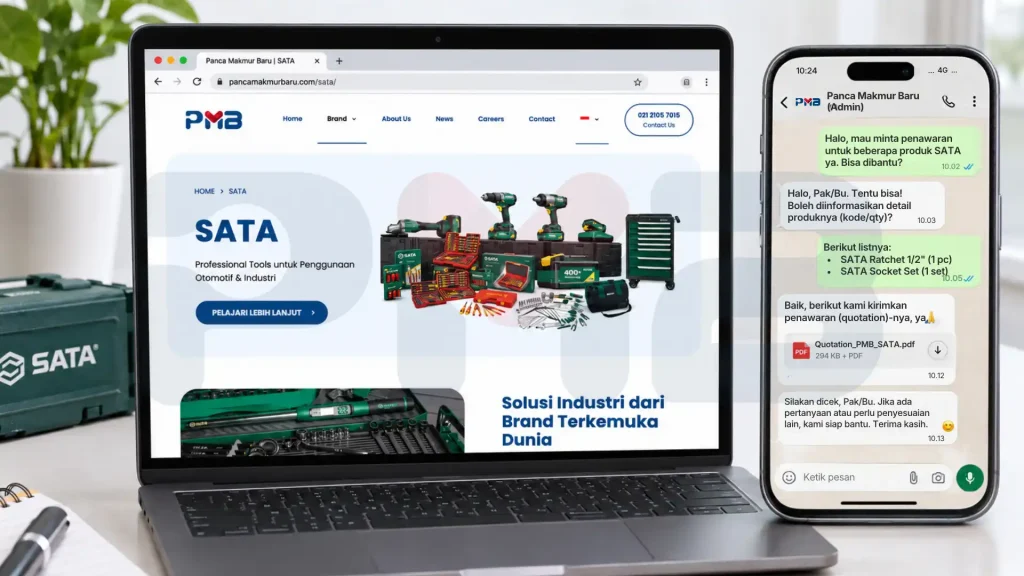
When purchasing professional grade tools, you should be confident that the products you receive are exactly what your work requires. This means more than just having the right shape; it also entails clear identification of the model, precise specifications, and a verified source of supply.
PT Panca Makmur Baru is an official distributor of SATA Tools in Indonesia, providing industrial tools, workshop equipment, and maintenance solutions for a wide range of industrial sectors.
Through PT Panca Makmur Baru, customers can consult on various categories of SATA products, including:
- Combination wrenches and various types of mechanical wrenches.
- Socket sets, ratchets, and compatible accessories.
- Screwdrivers and pliers for professional use.
- Tool kits and general hand tools.
- Tool storage and workshop equipment.
- Automotive tools and industrial maintenance equipment.
For procurement, customers can request detailed product specifications, model codes, warranty terms, and price quotes tailored to their company’s specific needs.
Would you like to learn more or place an order? Contact us at PT Panca Makmur Baru—the official SATA distributor in Indonesia. Click the “Contact Us” button now!