
Precision Tightening: SATA Torque Wrench vs. Standard Wrench, Which Is the Better Choice? | PT Panca Makmur Baru
Have you ever felt like a bolt was tightened “as hard as possible,” only to find it wasn’t tight enough? Or perhaps you tightened it too much, damaging the threads, the bolt itself, or the component?
This is why, in automotive work and industrial maintenance, “tight” does not necessarily mean “correct.”
For certain tasks, simply tightening a nut and bolt until they feel secure isn’t enough. Fasteners need to be tightened to a specific torque value such as 20 Nm, 50 Nm, or 100 Nm in accordance with manufacturer specifications.
This is where the distinction between a standard wrench and a torque wrench becomes crucial.
A standard wrench is designed to apply the mechanical force needed to tighten or loosen fasteners. In contrast, a torque wrench is designed to help the user apply a measured and controlled amount of tightening torque.
One excellent option for these tasks is the SATA Torque Wrench, available in various drive sizes and torque ranges to suit automotive, workshop, maintenance, and industrial applications.
What Is a Torque Wrench and Why Is It Needed?
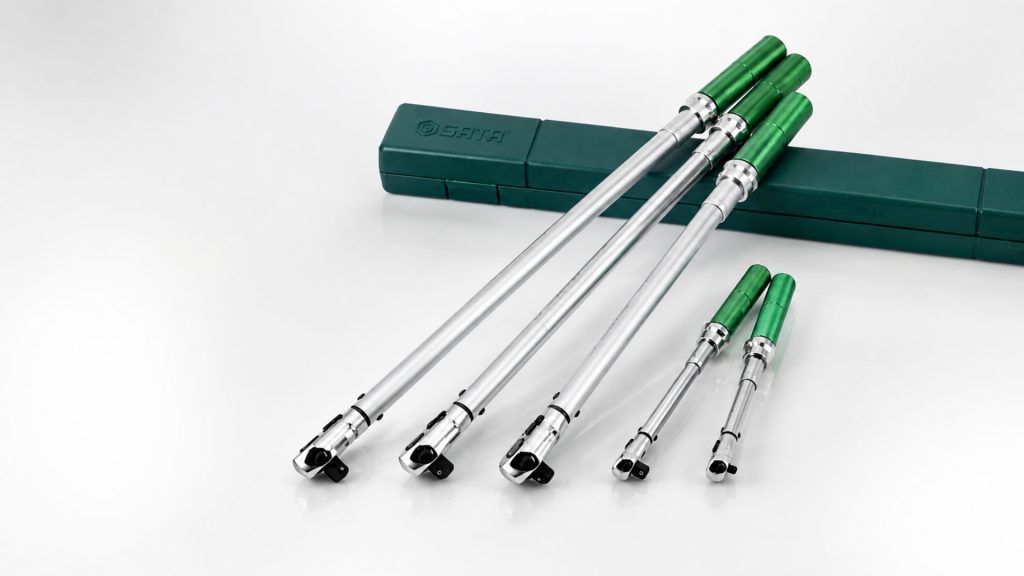
A torque wrench is a hand tool used when tightening a fastener requires a specific torque value. Torque is typically expressed in Newton meters (Nm).
Simply put: Torque = force × distance from the pivot point.
This means that the greater the applied force and the longer the tool’s lever arm, the greater the resulting torque.
The issue is that when using a standard wrench, the operator has no direct indication of whether the bolt has reached the required torque value.
For example, suppose a fastener specification calls for 50 Nm.
With a standard wrench, the user might feel the bolt is “tight enough.” But is it actually at 50 Nm?
- It could be under tightened.
- It could be over tightened.
Such differences cannot always be detected by feel alone. That is why torque wrenches are used for tasks requiring controlled tightening.
ISO 6789 specifically establishes requirements for hand torque tools used for the controlled tightening of bolts and nuts, including conformity testing and calibration methods.
SATA Torque Wrench vs. Standard Wrench
Instead of simply saying a torque wrench is “better,” let’s look at the differences in terms of the actual work.
| Factor | Standard Wrench | SATA Torque Wrench |
| Main function | Tightening and loosening fasteners | Tightening fasteners with controlled torque |
| Nm value | Cannot be adjusted directly | Adjustable according to the model range. |
| Tightening control | Depends on the operator’s feeling | Referring to the torque setting |
| Precision | Highly dependent on the operator | Designed for controlled tightening |
| Suitable for | Public Works | Tasks requiring torque specifications |
| Risk of overtightening | Harder to control | It is easier to control if used according to the procedure. |
| Consistency across tasks | Carrier dependent | More consistent when settings and procedures are correct. |
| Use | General & flexible | Specifically for controlled tightening |
In reality, the two tools are not 100% interchangeable; standard wrenches remain essential for general tasks.
A torque wrench becomes crucial when the tightening torque value is specified by the manufacturer or a work procedure.
“If It’s Already Tight, Why Use a Torque Wrench?”
This is one of the most common misconceptions. The issue goes beyond simply whether the bolt can be installed or not; what matters is the magnitude of the clamping force generated by the tightening process.
If the bolt is too loose, the joint may experience movement, vibration, or a loss of preload.
Conversely, if it is too tight, the fastener or components may be subjected to excessive loads. In certain situations, overtightening can also lead to thread damage, deformation, or even fastener failure.
In other words:
- Under torquing does not equal safety.
- Over torquing does not equal greater strength.
The goal is: Correct Torque = Correct Clamping Force.
That is why manufacturer torque specifications should not be replaced by guesswork based on “feel.”
Simple Example: Car Wheel Bolt
Imagine you are installing a car wheel. The manufacturer specifies a particular torque for the wheel lug nuts. When using a standard wrench, the operator must rely on manual force.
Operator A might apply a different amount of force than Operator B. Even the same operator can produce varying levels of force due to factors such as:
- body position,
- tool length,
- angle of use,
- fastener condition,
- fatigue,
- experience,
- and the technique used to pull the tool.
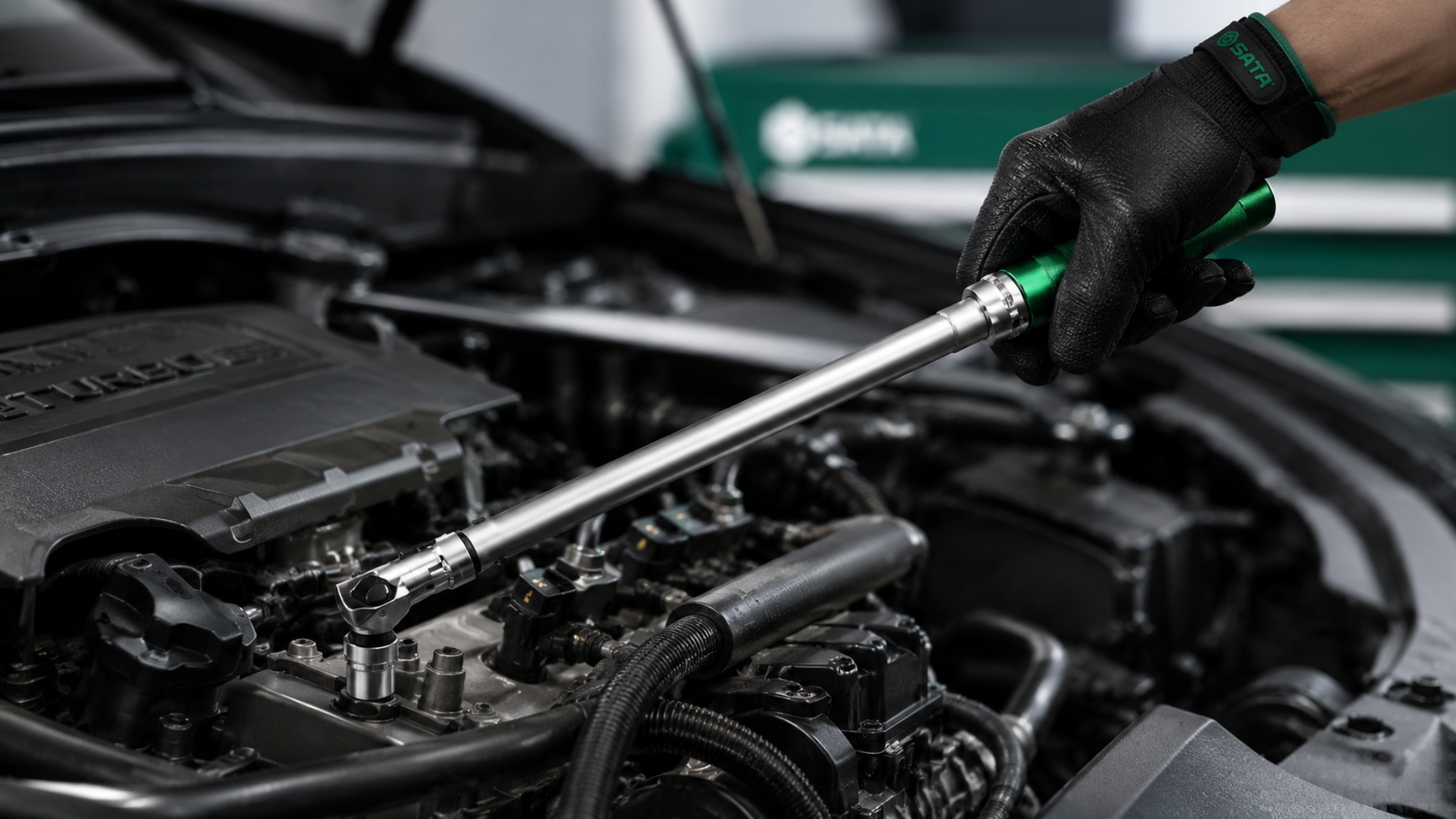
With a torque wrench, the torque value can be set to meet the required specifications.
When the set torque is reached, the wrench’s mechanism produces a “click” and/or an impulse depending on the model to indicate that the setting has been achieved. SATA incorporates this feature into its A-Series Mechanical Torque Wrench line.
The result: the tightening process becomes more measurable, repeatable, and controlled.
That Doesn’t Mean Every Bolt Requires a Torque Wrench
This is also an important point. Not every job requires a torque wrench. For tasks such as:
- removing bolts,
- loosening standard fasteners,
- light maintenance work,
- temporary tightening,
- work without specific torque requirements,
A standard wrench or ratchet may suffice. A torque wrench is more appropriate when:
- The manufacturer provides a torque specification
If the vehicle, engine, or equipment manual specifies a torque value, use a tool that allows that value to be applied in a controlled manner.
- Components have specific tightening tolerances
Some components must not be tightened haphazardly, as excessive or insufficient tightening can affect their performance.
- The task requires repeatability
For example, assembly or maintenance work performed repeatedly.
- Safety is a primary factor
In certain applications, such as automotive and machinery work, fastener tightening is crucial for reliability and safety.
SATA Torque Wrenches Come in Different Ranges. Which One Should You Choose?
This is the aspect where people often make the wrong purchase. Do not choose a torque wrench based solely on a 1/2″ drive size.
What matters more is: Does the torque range suit the requirements of the job?
SATA offers a variety of torque wrenches with different ranges. For example:
- 1/4″ – 1–5 Nm
- 3/8″ – 5–25 Nm
- 3/8″ – 10–50 Nm
- 1/2″ – 20–100 Nm
- 1/2″ – 40–200 Nm
- 1/2″ – 60–340 Nm
- 3/4″ – 100–550 Nm
- 3/4″ – 150–800 Nm
These ranges are from SATA’s current line of torque tools.
SATA 1/2″ Torque Wrench: A Popular Choice for Automotive Use
For automotive and workshop applications, one notable SATA model is the:
SATA ST96312SC – 1/2″ Mechanical Torque Wrench
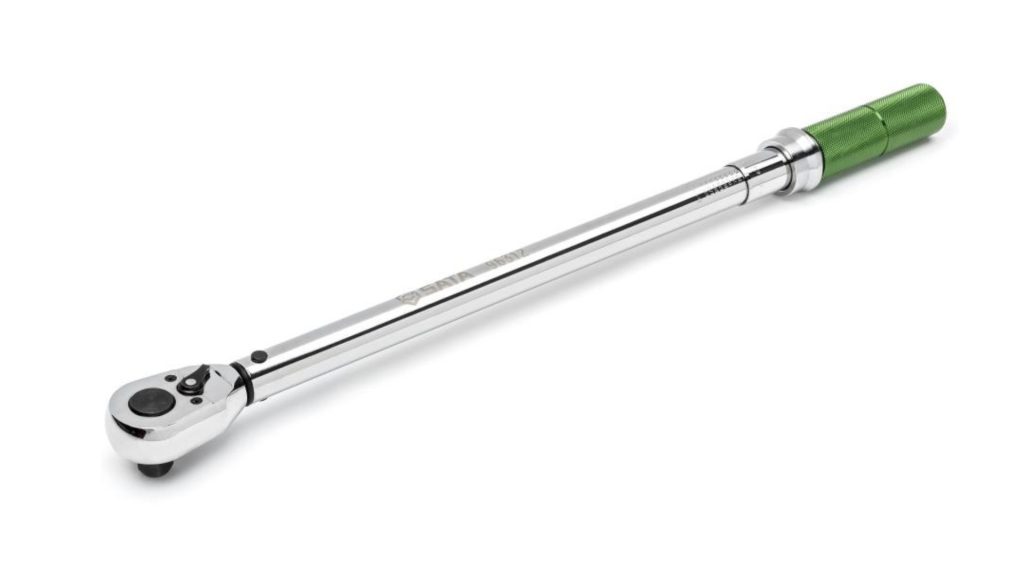
This model features:
- Drive: 1/2″
- Torque Range: 40–200 Nm
- Length: 555 mm
- Accuracy: Maximum ±3%
- Material: Chrome Vanadium Steel (Cr-V)
SATA also highlights features such as a low profile teardrop head, a knurled grip, a one handed reversing lever, an audible click/impulse signal when the torque setting is reached, and a locking collar to help prevent accidental setting changes.
The 40–200 Nm range makes this model suitable for a variety of automotive and mechanical maintenance tasks falling within that spectrum.
Meanwhile, for higher torque requirements, SATA also offers the ST96313SC model with a range of 60–340 Nm.
What Does ±3% Accuracy Mean for a Torque Wrench?
It is important to understand this before purchasing a torque wrench. If a torque wrench has an accuracy rating of ±3%, that figure does not mean every single use will be precise down to the exact value.
Accuracy represents the tool’s performance specification under defined testing conditions and procedures.
To put it simply:
If the torque setting is 100 Nm and the specification is ±3%, the mathematical range (±3% of 100 Nm) is 3 Nm.
This results in a range of 97–103 Nm.
However, do not use this mathematical example as a substitute for actual job specifications. If a vehicle or machinery manufacturer specifies a particular torque value, always adhere to the provided torque specifications and tightening procedures.
SATA specifies a maximum accuracy of ±3% for certain A-Series Mechanical Torque Wrenches.
Why Shouldn’t a Torque Wrench Be Treated Like a Regular Wrench?
This is a point that is often overlooked. A torque wrench is a precision tool, not merely a ratchet with a numerical scale.
Consequently, how the tool is stored and used affects its performance. SATA provides several important guidelines, including:
- do not use the torque wrench outside its specified torque range,
- do not modify the torque wrench yourself,
- do not subject the tool to impacts or drop it,
- perform periodic checks on functionality and accuracy,
- use appropriate spare parts if repairs are needed.
In short, simply buying a high quality torque wrench is not enough; proper usage and maintenance are also key to achieving the desired results.
Can a torque wrench be used to loosen bolts?
In practical terms, using a torque wrench a precision tightening tool in this manner is far from ideal.
The primary function of a torque wrench is controlled tightening.
To loosen extremely tight or seized bolts, use a breaker bar or a tool specifically designed for that purpose.
Do not use a torque wrench as a substitute for a breaker bar. Doing so not only risks damaging the tool but can also compromise its accuracy.
SATA also warns against using the torque wrench beyond its specified range or subjecting it to impact, as this can damage the tool and negatively affect both its accuracy and service life.
How to Properly Use a SATA Torque Wrench
In general, the process is straightforward.
- Find the torque specification
Do not guess. Refer to the vehicle manual, service manual, technical drawing, work instructions, or manufacturer specifications.
- Select a torque wrench with the appropriate range
Ensure the required torque value falls within the wrench’s operating range.
- Set the torque value
Adjust the scale to the required value.
- Lock the setting
Use the locking mechanism on the wrench to prevent the setting from changing accidentally.
- Attach the correct socket
Ensure the socket fits both the fastener and the torque wrench drive.
- Tighten using the correct motion
Pull the torque wrench in a controlled manner; avoid jerky movements or sudden impacts.
- Stop when the torque target is reached
With certain SATA mechanical torque wrenches, the user will feel a tactile impulse and/or hear an audible click when the set torque is reached.
- Do not continue pulling after the click
Stop once the target torque is reached. Avoid the urge to tighten it “just a little bit more,” as this can cause the actual torque to exceed the target.
Mechanical vs. Electronic Torque Wrenches: What’s the Difference?
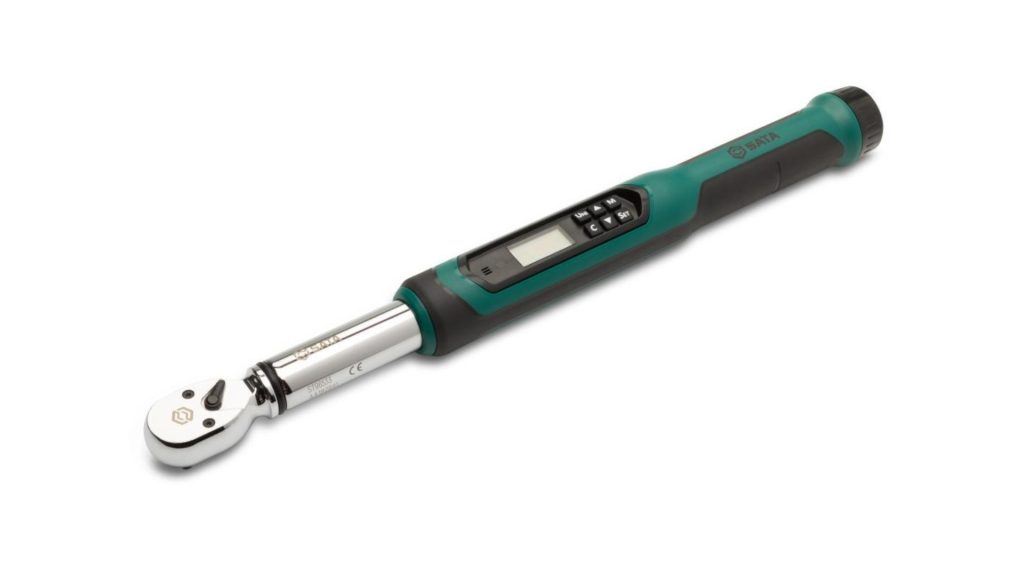
There is more than one type of torque wrench. Generally, you will find:
- Mechanical Torque Wrench
Uses a mechanical mechanism and a scale to set the torque. SATA offers a variety of mechanical torque wrenches, ranging from small-capacity models to heavy-duty versions. Advantages include:- relatively simple construction,
- no need for batteries,
- ease of use,
- suitability for workshops and maintenance,
- availability in various torque ranges.
- Electronic Torque Wrench
Uses sensors and an electronic display to show torque values. These are typically better suited when the user requires:- digital readings,
- more detailed monitoring,
- additional functions,
- or specific documentation capabilities.
Torque Wrenches for Workshops vs. Torque Wrenches for Industry
Requirements may vary.
- Automotive Workshops
For automotive needs, SATA states that its torque wrenches are suitable for tasks involving automotive work, heavy machinery, appliances, and various vehicle fastener applications. Consider the following:- torque range,
- drive size,
- vehicle size,
- type of work,
- wheel/fastener specifications,
- ease of use.
- Industrial Maintenance
In industrial operations, a torque wrench is not merely a tool for tightening bolts; it is an integral part of quality control and reliability. Consider these additional factors:- required torque range,
- frequency of use,
- repeatability requirements,
- maintenance procedures,
- documentation,
- inspection and verification,
- calibration requirements.
In industrial operations, a torque wrench is not merely a tool for tightening bolts; it is an integral part of quality control and reliability.
7 Common Mistakes When Using a Torque Wrench
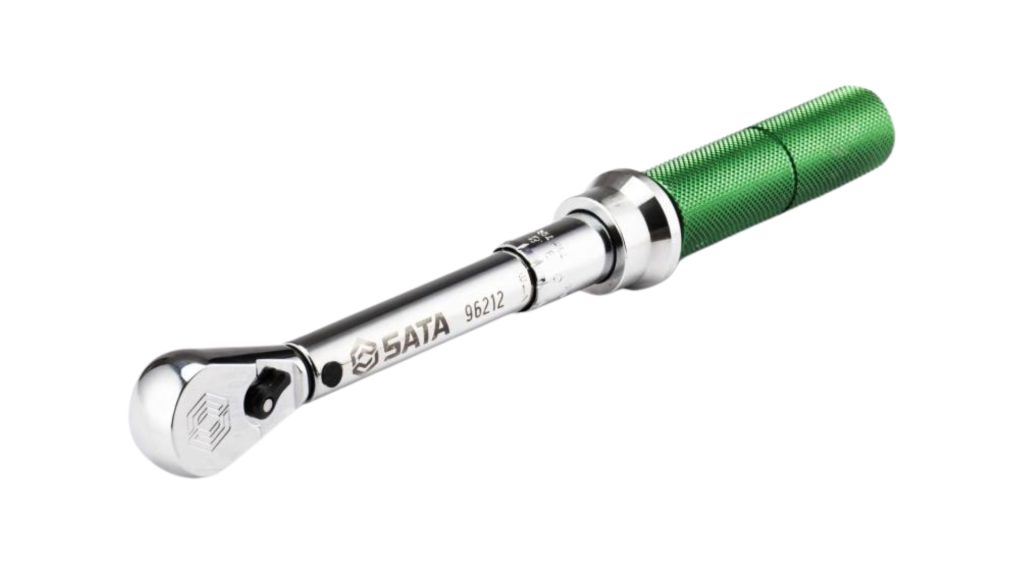
- Choosing based solely on drive size
A 1/2″ drive isn’t automatically the right choice; consider the torque range as well.
- Using it outside its specified range
For example, using a 40–200 Nm torque wrench for tasks requiring torque below that range. Avoid this; use a wrench with the appropriate range.
- Using it like a breaker bar
A torque wrench is not the primary tool for loosening seized bolts.
- Applying sudden, jerky force
A torque wrench should be used with a controlled motion.
- Continuing to pull after the “click”
The click indicates it is time to stop, not a signal to pull harder.
- Ignoring the condition of the socket
Damaged or incorrect sockets can compromise safety and work quality.
- Neglecting inspections
Precision tools require regular checks and maintenance.
So, Which One Should You Buy?
The answer isn’t simply “A torque wrench is better than a standard wrench.” Instead, it is: Use the right tool for the job.
If you only need a tool for:
- loosening bolts,
- installing nuts,
- general maintenance work,
then an open end wrench, combination wrench, or ratchet remains a practical choice.
However, if your work requires:
- adherence to torque specifications,
- controlled tightening,
- repeatability,
- protection against overtightening,
- or more quantifiable work standards,
then a torque wrench is the far more appropriate choice.
And once you have decided you need a torque wrench, don’t stop at the question: “What drive size (in inches) do I need?”
The more important question is: “What torque value (in Nm) do I need?”
Only then should you determine the appropriate drive size, torque wrench type, range, and features.
SATA Torque Wrench Recommendations Based on Needs
| Torque Requirements | SATA Options |
| 1–5 Nm | 1/4″ |
| 5–25 Nm | 3/8″ |
| 10–50 Nm | 3/8″ |
| 20–100 Nm | 1/2″ |
| 40–200 Nm | 1/2″ |
| 60–340 Nm | 1/2″ |
| 100–550 Nm | 3/4″ |
| 150–800 Nm | 3/4″ |
The range above refers to the SATA torque wrench line available in the SATA catalog or on the SATA website. Model availability may vary depending on the market and distribution period.
Why Choose a SATA Torque Wrench?
SATA offers an extensive range of torque tools, spanning from mechanical to electronic torque wrenches. For the A-Series Mechanical Torque Wrench, SATA provides features such as:
- Accuracy of up to ±3% on specific models
- A variety of torque ranges
- Low profile ratchet head
- Knurled grip for enhanced control
- Locking collar
- Audible click/impulse signal when the set torque is reached
- Steel or Cr-V construction on selected models
- Drive sizes ranging from 1/4″ to 3/4″ across the available lineup
SATA states that its torque tools are designed for professional grade use and applications in sectors such as automotive and heavy machinery.
Looking for a SATA torque wrench for workshop and industrial needs?
PT Panca Makmur Baru supplies a wide range of tools and industrial equipment, including SATA Tools designed for automotive, workshop, maintenance, and industrial applications.
Avoid choosing the wrong torque wrench by focusing solely on drive size or price.
Share your torque requirements such as torque range (Nm), specific application, and the nature of the work with the Panca Makmur Baru team to select the SATA torque wrench that best fits your needs.
Need a SATA torque wrench? Consult with Panca Makmur Baru regarding your requirements.
This ensures that you are not just buying a torque wrench, but acquiring the right tool for the right job.
Want to know more or place an order? Contact us at PT Panca Makmur Baru – the official SATA distributor in Indonesia. Click the “Contact Us” button now!