
Why Do Modern Warehouses Require Spill Pallets? Here’s a Safety & Compliance Reason That’s Often Overlooked | PT Panca Makmur Baru
In recent years, warehouse management standards in the industrial sector have undergone significant changes. Warehouses are no longer viewed simply as storage areas for goods, but have become a vital part of operational systems that must meet safety, efficiency, and regulatory compliance requirements.
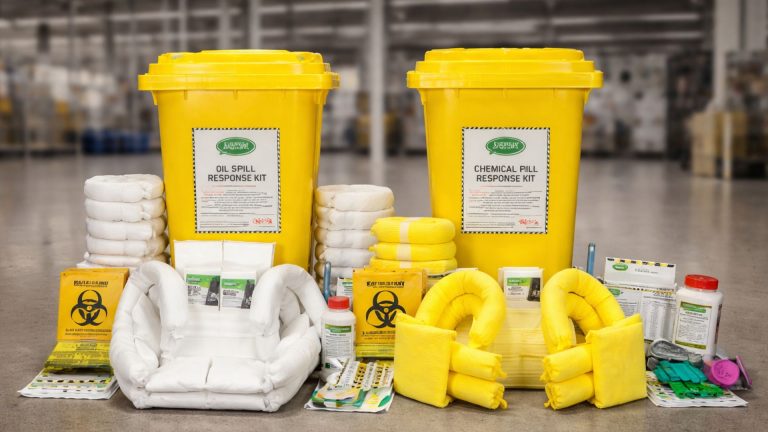
One aspect receiving increasing attention today is the spill control system. The use of this system is becoming increasingly common, particularly in industries dealing with chemicals, oils, and other industrial fluids.
The Often Overlooked Risk of Liquid Spills
In everyday practice, liquid spills are often considered a minor issue that can be quickly cleaned up. However, from an operational and safety perspective, the impact can be much greater.
Liquid spills have the potential to cause workplace accidents due to slippery floors, damage equipment and work areas, and increase the risk of environmental contamination. Furthermore, in some situations, spills can disrupt operations and cause unwanted downtime.
Therefore, many companies are shifting from a reactive to a preventative approach to dealing with potential spills.
The Importance of Secondary Containment in Industry
International industrial safety standards recognize the concept of secondary containment, an additional protection system designed to contain liquids in the event of a leak from a primary container, such as a drum or container.
The implementation of secondary containment is crucial, especially when storing hazardous liquids or materials with the potential to pollute the environment. One of the most common implementations is the spill containment pallet.
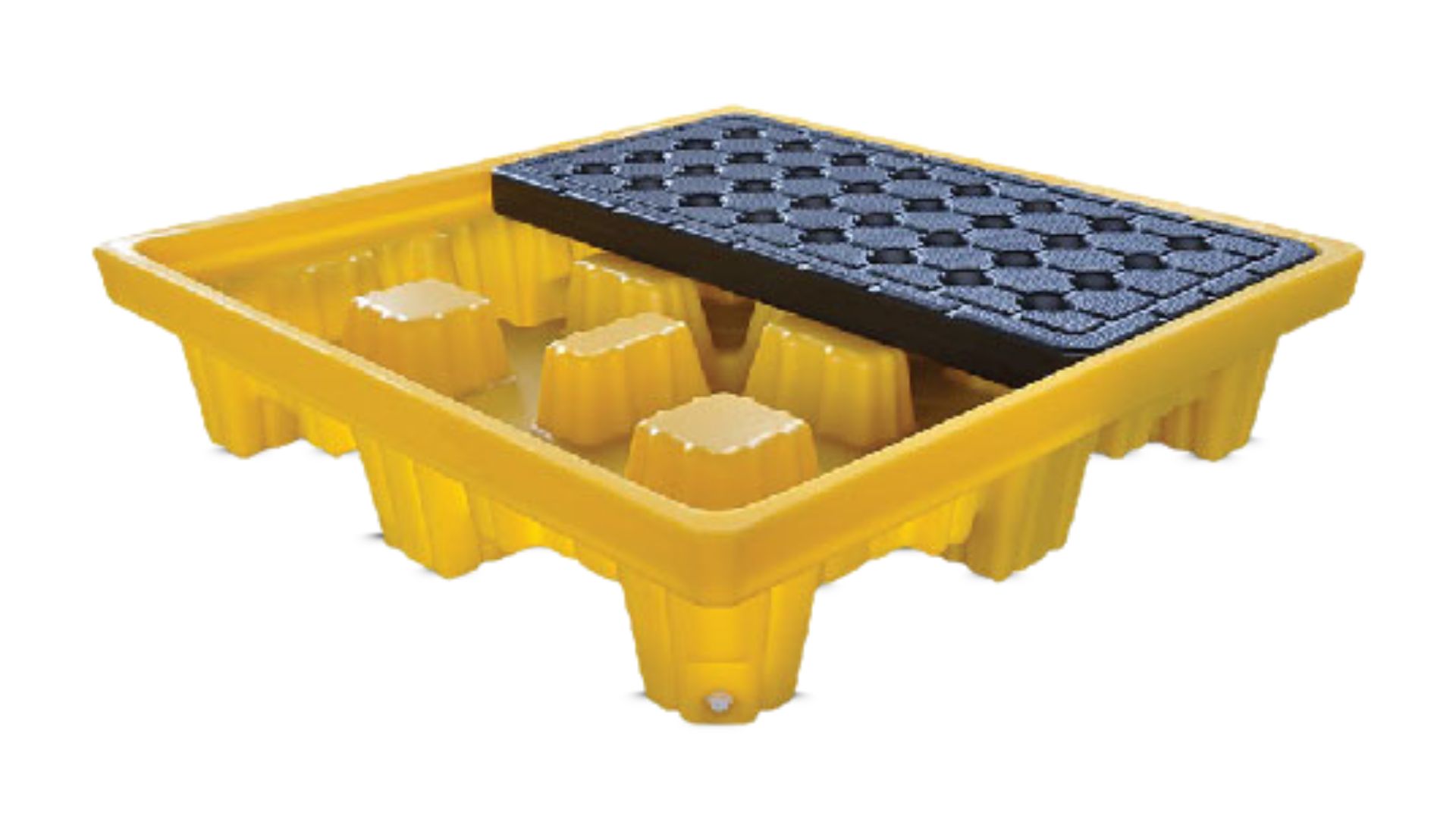
Spill pallets are designed with a bottom containment system that allows liquids to be contained and prevents them from spreading to the surrounding area in the event of a leak.
Pallet Spill Capacity Standards to Consider
When using spill pallets, you can’t choose them carelessly. Capacity standards must be met to ensure the containment system functions optimally.
Generally, spill pallets should be able to hold at least ten percent of the total volume of the stored liquid or at least one hundred percent of the volume of the largest container, whichever is greater. Some industry standards even recommend a capacity of one hundred and ten percent of the volume of the largest container.
Inappropriate capacity selection can result in an ineffective containment system and potentially create new problems.
Increasingly Strict Compliance and Audit Requirements
As industry demands increase, many companies are now required to meet various safety and environmental standards, both internally and externally.
This is especially true for companies working with multinational clients, participating in large-scale projects, or operating in highly regulated sectors such as manufacturing, oil and gas, and chemical handling.
Spill control systems are a crucial indicator in the audit process. Failure to comply with this requirement can result in audit failure, reduced client trust, and potential sanctions from regulators.
Financial Impact of Uncontrolled Spills
Beyond safety and regulatory aspects, liquid spills also have financial impacts that are often overlooked.
Costs incurred are not only from cleanup, but also include potential damage to facilities, operational disruptions, and material loss. In the long term, this can impact a company’s overall efficiency and productivity.
With the right spill containment system, companies can minimize these risks while maintaining operational stability.
The Role of Spill Pallets in Spill Control Systems
Spill pallets are a practical solution for implementing spill control in industrial areas. They function not only as leak containment but also as part of a broader protection system.
With a special design featuring a bottom catchment, spill pallets keep liquids contained within a single area, making them easier to control. This helps reduce the risk of liquid spread, maintains work area cleanliness, and improves employee safety.
Choosing the Right Spill Pallet for Industrial Needs
The selection of spill pallets should be tailored to operational needs. Several factors to consider include material type, storage capacity, and product design.
Materials such as polyethylene are generally used for their chemical resistance, while metal-based materials are more suitable for heavy loads or specific conditions. Furthermore, designs that facilitate easy removal and cleaning are also a plus for long-term use.
Spill Control Solutions from Panca Makmur Baru
As an industrial solutions provider, Panca Makmur Baru offers spill control products that can be tailored to the needs of various industrial sectors.
One available solution is the SABER Spill Pallet, designed to help contain liquid spills, maintain work area safety, and support the implementation of industry safety and compliance standards.
By selecting the right product, companies not only improve safety but also strengthen their overall operational systems.
The implementation of spill control in modern warehouses is not just a trend, but a necessity driven by increasing safety standards, regulatory demands, and the need for operational efficiency.
Through the use of systems such as spill pallets, companies can reduce the risk of accidents, maintain a safe work environment, and ensure readiness for increasingly stringent audits and industry standards.
Want to learn more or order now? Contact us at PT Panca Makmur Baru – the official SABER distributor. Click the “Contact Us” button now!